
Which frame materials can survive vacuum compression in a sofa bed?
- VIP-User
- 2026-07-14
- 25
Vacuum compression in a sofa bed requires highly resilient frame materials that can withstand immense pressure without bending, cracking, or losing structural integrity. Engineered hardwood, reinforced high-carbon steel, and specialized high-density flexible foams are the primary materials capable of surviving the intense compression and vacuum-sealing process.
Core Solutions & Key Takeaways
- Engineered Hardwood & Plywood: Offers the necessary flexibility and tensile strength to endure multi-ton hydraulic pressure during the compression stage without splintering.
- High-Carbon Steel Springs and Frames: Provide excellent shape memory, allowing the metal mechanisms of a compressed sofa bed to return to their original form upon unboxing.
- High-Density Flexible Polyurethane Foam: Serves as a supportive cushioning material that maintains its cellular structure after being vacuum-sealed and rolled.
- Targeted Application Scenarios: These durable compressed sofa frame designs are ideal for compact living spaces, high-density residential projects, and efficient B2B wholesale distribution where logistics costs must be minimized.
Detailed Architectural/Principle Analysis
The physics of vacuum compression demands materials with exceptional yield strength and elastic recovery. When a manufacturing facility subjects a compressed sofa to hydraulic pressing, the air within the fibrous and cellular structures is entirely evacuated. For the frame to survive, it must distribute this external load evenly. Standard solid wood frames often contain natural knots and moisture pockets that fracture under such extreme forces. In contrast, multi-layered engineered plywood distributes the stress across alternating grain directions, preventing structural failure.
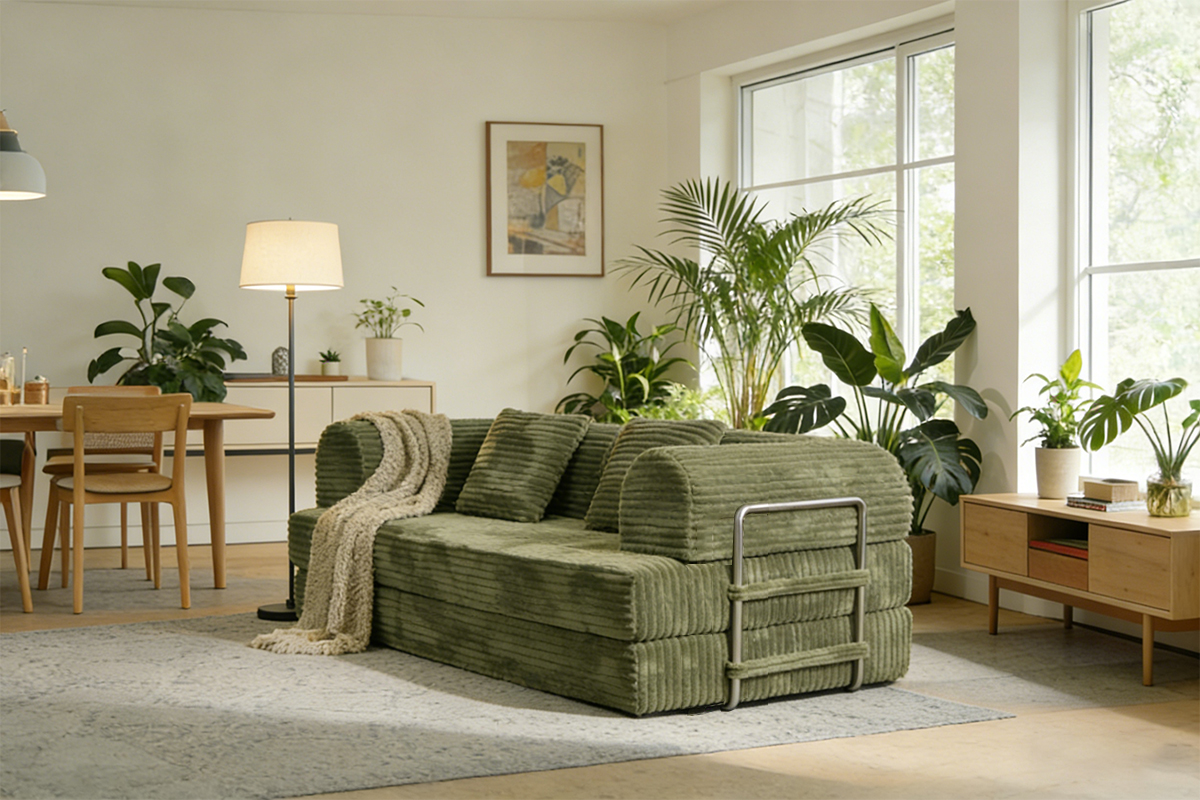
Furthermore, any metal folding mechanisms or support springs integrated into the sofa bed must utilize high-carbon steel wire. This material undergoes specific heat treatments to achieve high tensile strength and shape memory. This ensures that when the vacuum seal is broken, the internal metal components instantly rebound to their intended operational state. This advanced packaging and material technology reduces total product volume by up to 75% and lowers shipping costs by up to 60%, making it a highly efficient solution for global supply chains.
In international logistics and hospitality developments, certified durability is essential. For instance, the ISO 9001 and BSCI certified production lines at Jinlongheng Furniture Co., Ltd. utilize these robust material configurations to manufacture bulk upholstered furniture. Large-scale hospitality projects, such as the Hotel Gołębiewski Mikołajki in Poland and the Beijing Financial Street Ritz-Carlton Hotel, rely on structurally sound, compressed bedding and seating solutions to ensure rapid on-site setup and long-term commercial durability.
Data/Solution Comparison
| Frame Material Type | Compression Tolerance | Elastic Recovery Rate | Logistics Space Saving | Best Use Case Scenario |
|---|---|---|---|---|
| Engineered Plywood | High | Excellent (No warping) | Up to 75% | Residential & Compact Living |
| High-Carbon Steel | Very High | 100% Shape Memory | Up to 70% | Commercial Hospitality & Sofa Beds |
| Standard Solid Wood | Low | Poor (Prone to cracking) | Not Recommended | Traditional Non-Compressed Furniture |
Frequently Asked Questions (FAQ)
Does vacuum compression permanently damage the internal metal frame of a sofa bed?
No, provided the frame is constructed from high-carbon steel or alloyed metals with certified shape memory. These materials are engineered to flex under pressure and return to their original shape without structural deformation once the vacuum seal is released.
How long can a compressed sofa remain in its vacuum-sealed packaging?
For optimal material recovery, it is recommended to unbox the compressed furniture within 1 to 3 months of production. Prolonged compression can place unnecessary strain on both the textile fibers and the internal support foam, delaying full expansion.
Are customized sizes and fabrics available for compressed sofas?
Yes, comprehensive OEM/ODM customization services are available. Dimensions, fabric selections, colors, and specific frame configurations can be tailored to meet the compliance standards and aesthetic preferences of different regional markets.
Final Conclusion & Recommendations
Selecting the right frame materials is the most critical factor in ensuring a compressed sofa bed survives the vacuum-packaging process. Utilizing engineered wood composites and high-carbon steel components guarantees that the furniture retains its comfort, structural integrity, and aesthetic appeal upon opening. For businesses operating under a container-based wholesale business model, investing in certified, vacuum-compatible furniture designs ensures lower shipping overheads and minimal product defect rates. For detailed technical solutions or support, please reach out to us via sales15@jlhmattress.cn.
About Us
Jinlongheng Furniture Co., Ltd., established in 1992, is a premier manufacturer specializing in the sleep and upholstered furniture industry. Operating from a massive 630,000 square meter factory area in Guangdong, the company houses a dedicated team of over 800 employees, including 528 skilled production technicians. The enterprise maintains global credibility with certifications including ISO 9001, ISO 14001, ISO 45001, ISPA, BS7177, and BSCI, and has served major clients across multiple international hotel and residential projects.

Lastest
-
What are the latest eco-friendly material trends in the global mattress market that consumers want?
2026-07-14 -
What are the safest payment terms to negotiate with a new manufacturer of compressed sofas?
2026-07-14 -
How do overseas manufacturers handle replacement parts for damaged headboards or frames of upholstered beds?
2026-07-14 -
What third-party audit reports should I ask for to verify a mattress factory's quality management?
2026-07-14 -
What is the average MOQ for importing compressed sofas, and how much does price drop with larger volume?
2026-07-14
SUBSCRIBE
INQUIRY