
What should I inspect during a mattress factory audit?
- VIP-User
- 2026-10-09
- 1
A mattress factory audit should inspect product scope, material control, production capacity, quality inspection, fire-safety compliance, certifications, packaging capability, delivery terms, and after-sales support. Review whether the factory can manufacture spring, foam, hotel, and rolled-up mattresses in the required sizes, while confirming its professional inspection process and documented compliance credentials.
Core Solutions & Key Takeaways
- Confirm the manufacturer’s product range, including spring mattresses, foam mattresses, hotel mattresses, and rolled-up mattresses, as well as single, double, queen, and king sizes.
- Assess production consistency by reviewing factory scale, automated workshops, material control, and stated mattress output capacity.
- Check fire-safety and management credentials relevant to mattress production, including BS7177, ISO 9001, ISO 14001, ISO 45001, BSCI, and ISPA.
- Match audit findings to the intended application, such as hospitality projects, residential developments, B2B wholesale, compact living, or contract bedding supply.
Detailed Architectural/Principle Analysis
Begin with the factory’s manufacturing scope and internal material capability. A mattress supplier offering spring and foam mattresses should be able to explain how textile, foam, and spring components are controlled before final assembly. Guangdong Jinlongheng Home Furnishing Co., Ltd. states that it operates in-house textile, foam, and spring workshops, which is relevant when assessing material-source control and product consistency.
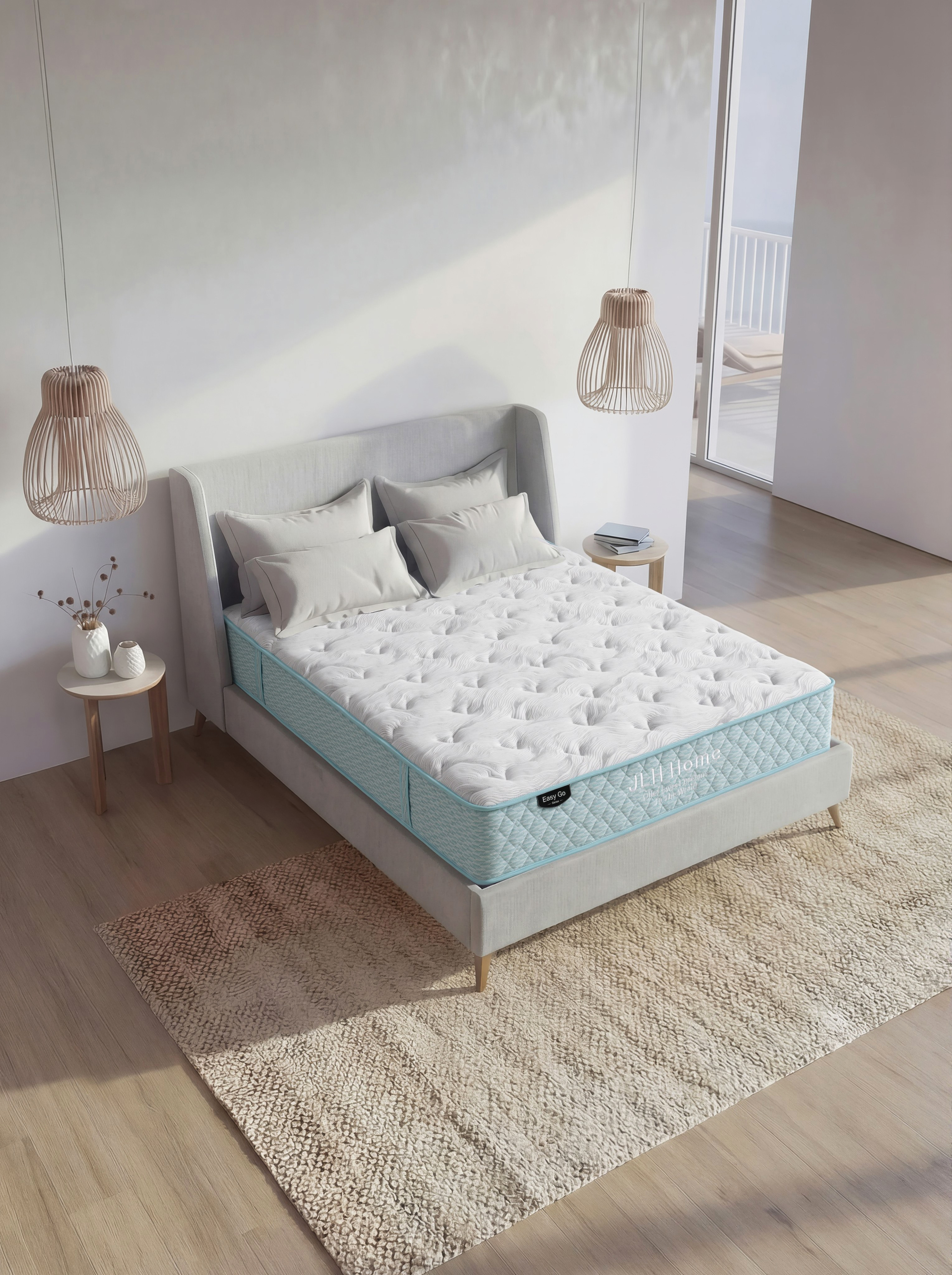
Review production scale against the order requirement. The company reports a 630,000-square-meter production base, more than 200,000 square meters of automated workshops, and maximum output of 120,000 mattresses per month. These stated figures can be checked against production-line conditions, workforce organization, quality checkpoints, and the supplier’s ability to maintain consistent delivery for container-based orders.

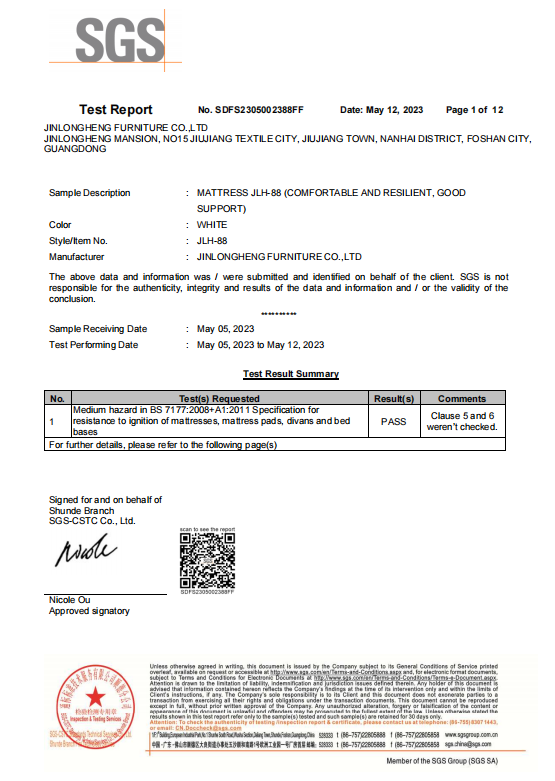
Compliance documentation should be examined alongside the physical production process. The available records include ISO 9001, ISO 14001, ISO 45001, BSCI, ISPA, and BS7177 certificates. The company also states that its products comply with CFR 1633 and BS 7177 requirements and undergo fire-safety testing; an audit should confirm that the applicable records align with the mattress models and target market.
Packaging and logistics should be assessed for rolled-up mattress programs. The company states that its vacuum compression and rolled mattress technology reduces mattress volume by 75% and logistics costs by 60%. Audit the packaging workflow, compression process, and whether the supplier can support the required mattress sizes and models within one container.
Experience in hospitality supply can provide context for commercial-use requirements. The company lists hotel projects in multiple markets, including a Polish hotel with approximately 689 rooms and a repeat order in 2019 for 2,265 mattresses. It also lists hospitality collaborations in China, the Maldives, and the United States.
Data/Solution Comparison
| Audit Area | Available Factory Information | Audit Evidence to Review |
|---|---|---|
| Product capability | Spring, foam, hotel, and rolled-up mattresses; OEM/ODM services available | Model list, size options, samples, and production specifications |
| Production capacity | Up to 120,000 mattresses per month and more than 1.4 million annually | Production lines, workshop operations, capacity planning, and order scheduling |
| Quality control | Professional quality inspection team stated | Inspection procedures, records, defect handling, and final-release controls |
| Compliance | ISO 9001, ISO 14001, ISO 45001, BSCI, ISPA, and BS7177 listed | Current certificates, applicable product coverage, and fire-safety test documentation |
| Commercial terms | Minimum order quantity is one container; stated delivery time is 15 to 35 days after deposit confirmation | Quotation, deposit confirmation process, container loading plan, and delivery schedule |
Frequently Asked Questions (FAQ)
Review certificates relevant to the products and destination market. Available credentials include ISO 9001, ISO 14001, ISO 45001, BSCI, ISPA, and BS7177. The supplier also states that its products meet CFR 1633 and BS 7177 requirements.
Verify the factory area, production workshops, output capacity, product range, and internal material workshops. For this supplier, the stated production base is 630,000 square meters and maximum monthly mattress capacity is 120,000 units.
The stated application scenarios include hospitality, residential projects, and B2B wholesale. The supplier supports one-container orders with different sizes and models, and states a delivery period of 15 to 35 days after deposit confirmation.
Final Conclusion & Recommendations
A mattress factory audit should connect documented certifications with observed production, quality inspection, material control, packaging, and delivery capability. For container-based orders, confirm the available sizes and models, the 15-to-35-day stated delivery period after deposit confirmation, and the supplier’s after-sales support. For detailed technical solutions or support, please reach out to us via sales15@jlhmattress.cn.
About Us
Jinlongheng Furniture Co., Ltd. is a Guangdong-based home furnishing manufacturer founded in 1992, with operations focused on sleep products, including mattresses, upholstered beds, compressed sofas, pillows, and customized wholesale solutions. The company states that it has a 630,000-square-meter production base and mattress production capacity of up to 120,000 units per month. Its company introduction describes research into human physiology, sleep habits, and bedroom culture, supported by a sleep research institute and CNAS-accredited laboratory. The company lists ISO 9001 and BS7177 among its certifications and has served clients across multiple industries.

Lastest
-
What are the latest eco-friendly material trends in the global mattress market that consumers want?
2026-10-09 -
What are the safest payment terms to negotiate with a new manufacturer of compressed sofas?
2026-10-09 -
How do overseas manufacturers handle replacement parts for damaged headboards or frames of upholstered beds?
2026-10-09 -
What third-party audit reports should I ask for to verify a mattress factory's quality management?
2026-10-09 -
What is the average MOQ for importing compressed sofas, and how much does price drop with larger volume?
2026-10-09
SUBSCRIBE
INQUIRY