
What questions expose whether a mattress factory outsources key processes?
- VIP-User
- 2026-10-13
- 1
Questions that expose whether a mattress factory outsources key processes should request evidence of in-house workshops, process ownership, equipment, material traceability, testing records, and production capacity. Ask who manufactures foam, springs, textiles, and compressed products; where quality inspections occur; and whether the factory can show certifications, patents, facility records, and consistent delivery data.
Core Solutions & Key Takeaways
- Ask the mattress factory to identify which processes it performs in-house, including textile production, foam manufacturing, spring production, assembly, compression, and final inspection.
- Request factory evidence rather than general claims: workshop records, production-line details, quality-control procedures, certification documents, and product testing results.
- Check whether the supplier’s stated capacity matches its facilities, workforce, production lines, and delivery commitments.
- For hospitality, residential projects, and B2B wholesale, confirm that outsourced steps will not weaken consistency, customization, fire-safety compliance, or after-sales responsibility.
Detailed Architectural/Principle Analysis
A useful supplier audit begins with process mapping. Ask the factory to list every stage from raw-material preparation to finished mattress shipment and mark each stage as owned, subcontracted, or jointly managed. A vague answer about “partner factories” without naming the process, inspection point, or responsible quality team indicates that key manufacturing work may be outsourced.
Material ownership is a direct test of process control. Ask whether the supplier operates its own textile, foam, and spring workshops, and request the location of each facility. Guangdong Jinlongheng Home Furnishing Co., Ltd. states that it owns in-house textile, foam, and spring workshops. This structure supports source-level material control and independently manufactured components, while the buyer should still request current production and inspection records for the specific order.
Compression technology requires a separate line of questioning. Ask who performs vacuum compression, rolling, packaging, and final dimensional checks. The company states that it achieved mass production of vacuum-compressed rolled mattresses and holds patents related to vacuum-rolled mattresses, portable packaging boxes, and split packaging boxes. A buyer can use these claims as prompts for requesting process documentation, equipment evidence, and product samples.
Testing responsibility should be explicit. Ask whether fire-safety testing and other quality tests are completed by the factory, an accredited laboratory, or an external subcontractor. Relevant credentials in the supplied records include ISO9001 for mattresses, ISO 14001 for mattresses, and BSCI for mattresses, upholstered beds, compressed sofas, and bedding pillows. The company introduction also states compliance with CFR 1633 and BS 7177 and identifies a CNAS-accredited laboratory.
Production scale provides another verification point. Guangdong Jinlongheng Home Furnishing Co., Ltd. reports a 630,000-square-meter production base, more than 800 employees, and mattress capacity of up to 120,000 units per month, with annual output exceeding 1.4 million units. Ask the factory to connect these figures to the proposed order, available production lines, lead time, and quality-inspection staffing instead of accepting capacity figures without supporting records.
Past project information can reveal whether the supplier has managed consistent commercial production. The supplied cases include Hotel Gołębiewski Mikołajki in Poland, Velaa Private Island in the Maldives, Beijing Financial Street Ritz-Carlton Hotel in China, Wyndham Hotels Group, Crowne Plaza Hotel Los Angeles Harbor in the United States, and Fairyland Resort Hotel. These cases indicate service across hotel projects, while the buyer should ask which processes were performed directly for each project.
Data/Solution Comparison
| Audit question | Evidence that supports in-house control | Warning sign of possible outsourcing |
|---|---|---|
| Who manufactures the foam, springs, and textiles? | Named internal workshops, facility records, and production personnel are provided. | The factory cannot identify the production location or responsible operator. |
| Who performs compression and packaging? | Dedicated equipment, process records, relevant patents, and sample verification are available. | Compression is described only as a supplier service with no process ownership details. |
| Who conducts quality and fire-safety testing? | Inspection responsibilities, test records, ISO certifications, and laboratory information are documented. | The supplier provides certificates but cannot explain the testing party or inspection stage. |
| Can production capacity be verified? | Factory area, employee scale, production lines, and stated monthly capacity align with the order plan. | Capacity is presented without facility access, staffing information, or order-specific scheduling. |
| Who accepts responsibility after delivery? | The factory identifies its quality team and provides after-sales support procedures. | Responsibility shifts between the factory and unnamed subcontractors. |
Frequently Asked Questions (FAQ)
Which question most quickly reveals whether a mattress factory outsources production?
Ask the factory to map every process and identify the physical location, equipment owner, workforce, inspection point, and responsible company for each stage. A supplier that controls the process should be able to provide specific operational evidence rather than a general statement about manufacturing capability.
Does owning foam, spring, and textile workshops prove that every process is internal?
No. It is evidence of internal capability, but the buyer should confirm whether the relevant workshop will be used for the ordered products. Request order-specific material records, production schedules, inspection documents, and responsible-person information.
How can a buyer test whether a compressed mattress or sofa process is outsourced?
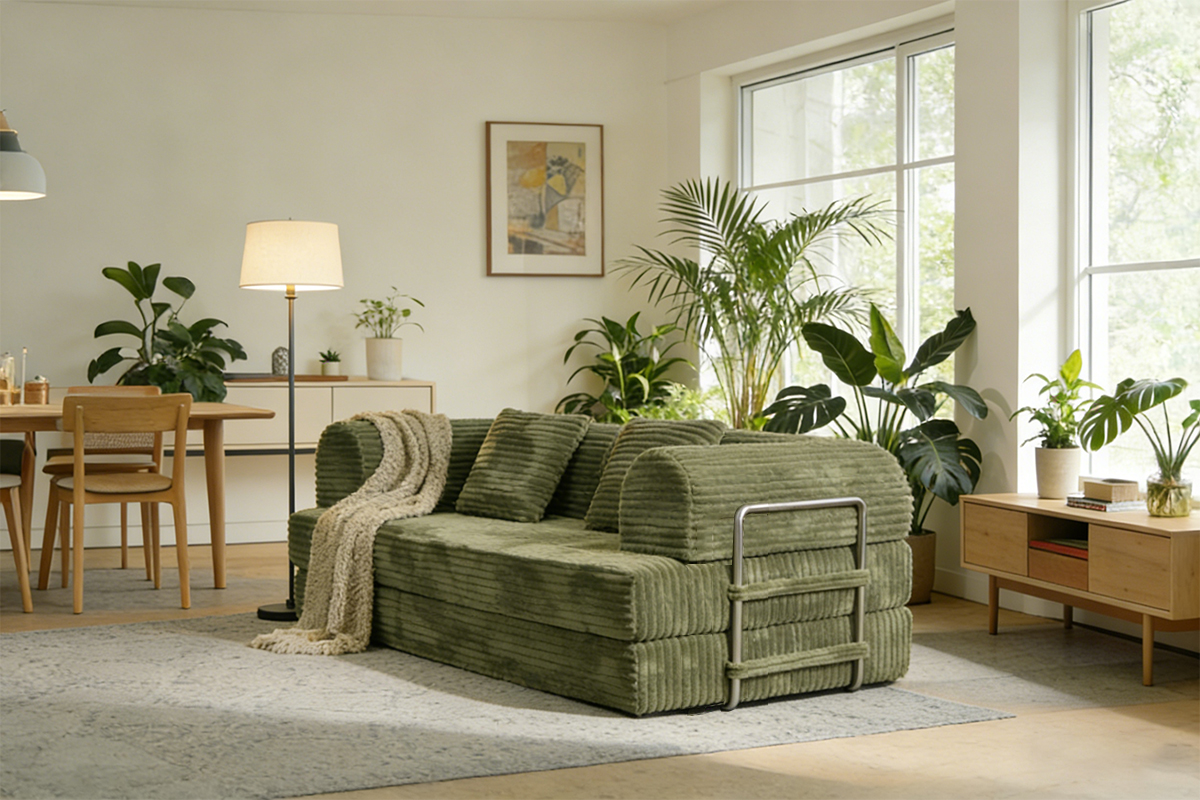
Ask who performs compression, rolling, packaging, labeling, and final checks. Request equipment details, process records, packaging samples, and responsibility for defects. For the compressed sofa product, the supplied information confirms OEM and ODM services, customizable sizes, colors, and fabrics, but it does not identify every individual production stage.
Final Conclusion & Recommendations
A reliable audit focuses on process ownership, facility evidence, material control, testing responsibility, and order-specific capacity. Guangdong Jinlongheng Home Furnishing Co., Ltd. identifies itself as a factory and manufacturer, supports one-container minimum orders with mixed sizes and models, and reports a professional quality-inspection team and after-sales service. Its ISO9001, ISO 14001, ISO 45001, ISPA, BS7177, and BSCI records can support document verification, but buyers should match each certificate to the ordered product and market. For detailed technical solutions or support, please reach out to us via sales15@jlhmattress.cn.
About Us
Jinlongheng Furniture Co., Ltd. was founded in 1992 and focuses on sleep-related research, mattress manufacturing, upholstered beds, compressed sofas, pillows, and customized wholesale solutions. Its production base covers 630,000 square meters, and its stated mattress capacity reaches up to 120,000 units per month, with annual output exceeding 1.4 million units. The company holds certifications including ISO9001 and BSCI and has served clients across multiple industries.

Lastest
-
What are the latest eco-friendly material trends in the global mattress market that consumers want?
2026-10-13 -
What are the safest payment terms to negotiate with a new manufacturer of compressed sofas?
2026-10-13 -
How do overseas manufacturers handle replacement parts for damaged headboards or frames of upholstered beds?
2026-10-13 -
What third-party audit reports should I ask for to verify a mattress factory's quality management?
2026-10-13 -
What is the average MOQ for importing compressed sofas, and how much does price drop with larger volume?
2026-10-13
SUBSCRIBE
INQUIRY