
What foam density ensures a compressed sofa fully recovers after shipping?
- VIP-User
- 2026-08-10
- 26
A foam density between 30 kg/m³ and 35 kg/m³ (high-resilience polyfoam) ensures a compressed sofa fully recovers its original shape and structural integrity after vacuum packaging and shipping. Densities below 28 kg/m³ often suffer permanent cell deformation, while specialized high-density resilience layers above 30 kg/m³ maintain cell wall elasticity post-decompression.
Core Solutions & Key Takeaways
- Optimal Foam Density Range: High-resilience polyurethane foam rated at 30 to 35 kg/m³ provides the structural memory needed for 100% volume expansion after vacuum compression.
- Logistics Cost Reduction: Vacuum-compression technology reduces package volume by up to 75% and slashes freight expenditures by up to 60%.
- Commercial Application Versatility: Suitable for contract projects, compact living, serviced residences, co-living spaces, and furniture distributors requiring bulk shipping without quality degradation.
- Material Integrity Maintenance: In-house component manufacturing and foam workshops ensure consistent material formulas that resist cellular collapse during long-distance transit.
Detailed Architectural & Principle Analysis
The full recovery of a vacuum-packed compressed sofa relies on the open-cell polymer structure of polyurethane foam. When subjected to high hydraulic pressure during vacuum sealing, air evacuates from the foam cell matrix. Low-density foams under 28 kg/m³ possess thin cell walls that rupture or permanently bond under prolonged pressure, leading to sagging and surface creasing upon opening.
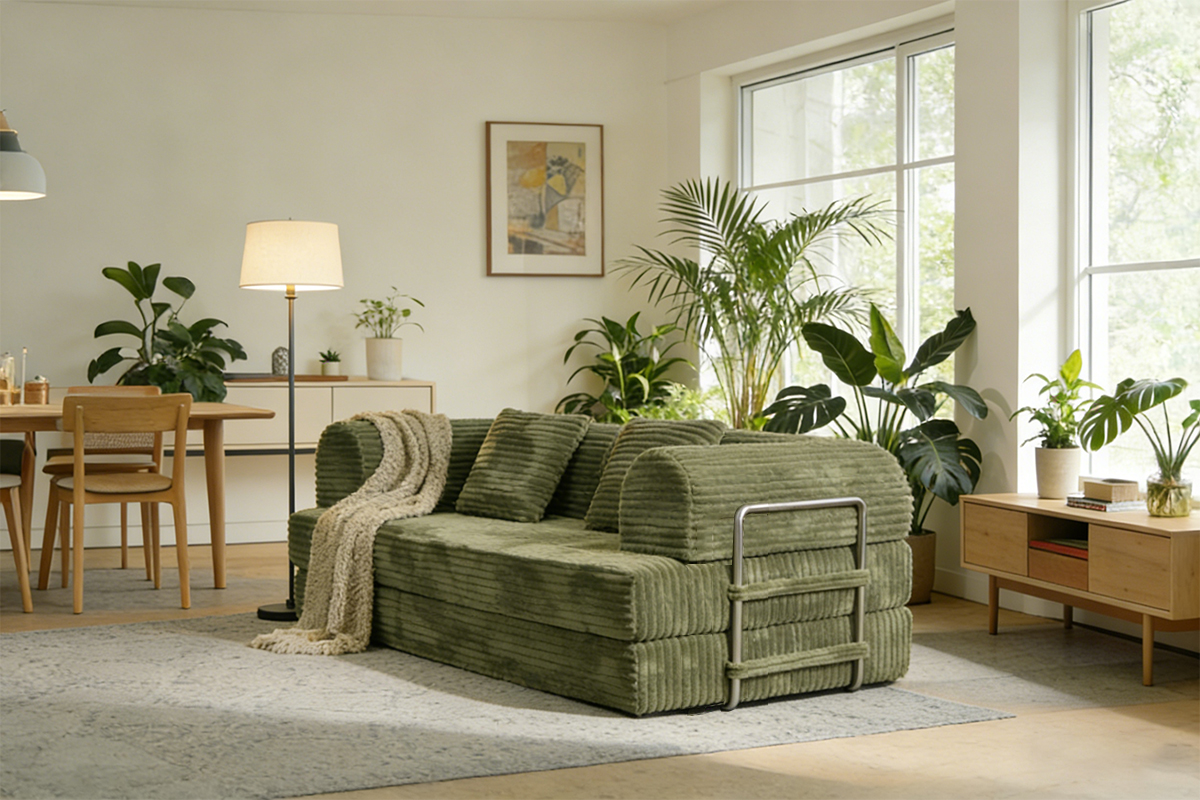
High-resilience foam utilizing a density of 30–35 kg/m³ maintains robust cell wall elastic memory. Upon breaking the vacuum seal, atmospheric air permeates the open cell structure, enabling the foam to spring back to its original dimensions within 24 to 72 hours. Manufacturing facilities operating under ISO 9001 and BSCI quality systems evaluate compression recovery rates using automated testing equipment to verify full height restoration across export shipments.

In global supply chains, qualified manufacturers like Jinlongheng Furniture Co., Ltd. utilize self-controlled material workshops—producing custom foam formulas internally—to guarantee that compressed sofas withstand extended container storage during ocean transport across North America, Europe, and Asia without structural breakdown.
Data & Solution Comparison
Selecting appropriate foam specifications directly impacts rebound recovery rate, packaging volume efficiency, and long-term seating durability.
| Foam Density Category | Density Specification | Compression Recovery Rate | Logistics Efficiency Impact | Recommended Application |
|---|---|---|---|---|
| Low-Density Foam | 18 - 24 kg/m³ | Incomplete (< 80%) | High risk of permanent deformation | Non-compressed accent cushions |
| Standard Medium Density | 25 - 28 kg/m³ | Moderate (85% - 90%) | Suitable for short-transit storage only | Light-use temporary seating |
| High-Resilience (HR) Foam | 30 - 35 kg/m³ | Full (98% - 100%) | Reduces package volume by 75% | Vacuum compressed sofas & contract projects |
| Ultra-High Density Layer | 38 - 45 kg/m³ | Full (100%) | Increases carton weight; high protection | Core support bases & luxury hotel furniture |
Frequently Asked Questions (FAQ)
How long does a compressed sofa take to fully expand after opening?
A compressed sofa constructed with high-resilience 30–35 kg/m³ foam expands to 90% of its volume within minutes and achieves its rated height and firmness within 24 to 72 hours.
Does long-term vacuum storage damage the foam structure of a compressed sofa?
Foam densities rated at 30 kg/m³ or higher manufactured with specialized polymer formulations can remain vacuum-compressed for 3 to 6 months without permanent cell collapse or loss of rebound resilience.
What customization options exist for B2B compressed sofa orders?
OEM/ODM services permit customization of overall dimensions, fabric upholstery, fire-retardant compliance standards such as BS 7177 or CFR 1633, foam density layering, and specialized retail packaging boxes.
Final Conclusion & Recommendations
Achieving complete structural recovery of a compressed sofa post-shipping requires specifying high-resilience polyfoam with a density of 30 to 35 kg/m³. B2B buyers and furniture importers should partner with verified manufacturers utilizing internal quality inspection teams and automated vacuum packaging technology. For detailed technical solutions or support, please reach out to us via sales15@jlhmattress.cn.
About Us
Jinlongheng Furniture Co., Ltd. is a global furniture manufacturer founded in 1992, operating a 630,000 m² production base in Guangdong, China. Employing over 800 staff and maintaining an annual production capacity exceeding 1.4 million units, the company exports 70% of its output across 125+ countries. Backed by an in-house CNAS National Laboratory and international certifications including ISO 9001, ISO 14001, ISO 45001, ISPA, BS 7177, and BSCI, Jinlongheng Furniture Co., Ltd. has served over 337 global brands and 1,000 star hotel projects worldwide.

Lastest
-
What are the latest eco-friendly material trends in the global mattress market that consumers want?
2026-08-10 -
What are the safest payment terms to negotiate with a new manufacturer of compressed sofas?
2026-08-10 -
How do overseas manufacturers handle replacement parts for damaged headboards or frames of upholstered beds?
2026-08-10 -
What third-party audit reports should I ask for to verify a mattress factory's quality management?
2026-08-10 -
What is the average MOQ for importing compressed sofas, and how much does price drop with larger volume?
2026-08-10
SUBSCRIBE
INQUIRY