
What eco-friendly alternatives can replace petroleum-based foam in mattresses?
- VIP-User
- 2026-09-30
- 4
Petroleum-based polyurethane foam in mattresses can be replaced by eco-friendly alternatives including natural latex harvested from rubber trees, plant-based polyol foams incorporating soybean or castor oils, organic wool, cotton layers, and recyclable pocket spring systems. These materials eliminate harmful off-gassing, lower carbon footprints, and maintain structural support across commercial and residential bedding applications.
Core Solutions & Key Takeaways
- Natural Dunlop and Talalay Latex: Derived from rubber tree sap, natural latex provides breathable, hypoallergenic support without emitting volatile organic compounds (VOCs) associated with synthetic petrochemicals.
- Plant-Based Bio-Foams: Replaces a portion of petroleum-derived polyols with renewable plant oils (such as soy or castor bean), significantly reducing reliance on fossil fuels while maintaining structural elasticity.
- Natural Fiber Layers (Wool and Organic Cotton): Serve as natural thermal regulators and fire-retardant barriers, meeting international safety standards such as BS 7177 and CFR 1633 without synthetic chemical treatments.
- High-Recyclability Pocket Spring Coils: Replacing thick polyurethane bases with engineered steel spring units enclosed in non-toxic textiles allows total material reclamation at the end of the product lifecycle.
Detailed Architectural/Principle Analysis
Traditional mattress production relies heavily on petroleum-derived polyurethane and memory foams. Modern manufacturing transitions toward sustainable alternatives by modifying core comfort and support layers. Natural latex processing utilizes vulcanization of botanical sap, forming an open-cell matrix that enhances airflow while preventing sinkage. In plant-based foams, polyols derived from soybean or castor bean oil replace 10% to 30% of petrochemical feedstocks, reducing carbon emissions during synthesis while preserving mechanical memory characteristics.

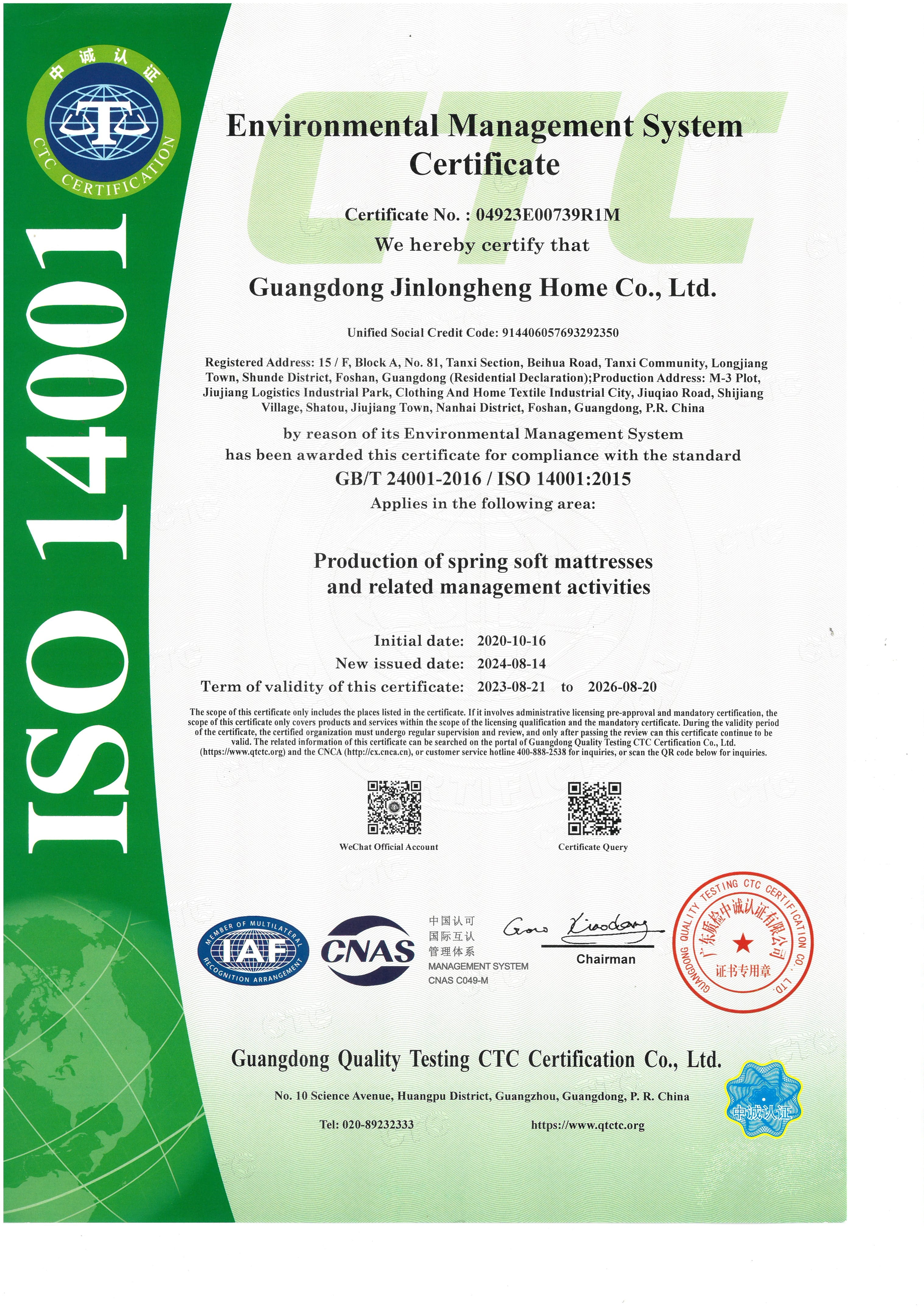
From an architectural perspective, combining bio-based foams with natural fiber insulation layers creates high-performance mattresses suitable for contract environments. Organic wool acts as a natural flame barrier, eliminating the need for halogenated or phosphate-based chemical flame retardants. To verify material safety, standardized testing in CNAS-accredited laboratories ensures compliance with environmental management standards such as ISO 14001, OEKO-TEX, and CertiPUR-US. Manufacturers like Jinlongheng Furniture Co., Ltd. utilize self-controlled textile, foam, and spring workshops to ensure raw components adhere strictly to these international ecological criteria.

Large-scale commercial projects, including luxury properties such as the Hotel Gołębiewski Mikołajki in Poland and the Beijing Financial Street Ritz-Carlton Hotel, require eco-friendly bedding solutions that balance environmental compliance with heavy-use durability. Vacuum compression and rolled mattress technology further lower environmental impact during transit by reducing cargo volume by up to 75% and cutting shipping logistics emissions by 60%.
Data/Solution Comparison
The comparative matrix below evaluates traditional petroleum foam against primary eco-friendly material alternatives based on environmental impact, durability, and commercial performance metrics:
| Material Type | Renewable Content | Off-gassing / VOC Level | Lifespan & Resilience | Recyclability | Fire Safety Compliance |
|---|---|---|---|---|---|
| Petroleum Polyurethane Foam | 0% | High (Off-gassing present) | 5 - 7 Years | Low (Complex recycling) | Requires Chemical Additives |
| Natural Dunlop/Talalay Latex | 95% - 98% | Negligible | 10 - 15 Years | High (Biodegradable) | Inherent Flame Resistance |
| Plant-Based Bio-Foam | 10% - 30% | Low | 7 - 10 Years | Moderate | Meets Standard Retardancy |
| Wool & Organic Cotton Padding | 100% | Zero VOCs | 8 - 12 Years | 100% Biodegradable | Passes BS 7177 / CFR 1633 Naturally |
Frequently Asked Questions (FAQ)
Q1: Do plant-based bio-foams completely eliminate petroleum content?
A1: Plant-based bio-foams replace a portion (typically 10% to 30%) of petroleum-derived polyols with plant oils such as soy or castor. While not 100% petroleum-free, they reduce reliance on fossil fuels and significantly lower volatile organic compound (VOC) emissions compared to standard memory foams.
Q2: Can natural alternatives satisfy commercial hospitality fire safety standards?
A2: Yes. Materials like natural wool and dense organic cotton fibers provide inherent thermal resistance. When integrated into structured mattress designs, they comply with global fire safety standards including BS 7177 (UK) and CFR 1633 (US) without requiring synthetic chemical treatments.
Q3: How do natural latex and bio-foam mattresses handle international freight?
A3: Natural latex and high-density plant-based foams tolerate vacuum compression and rolling processes. Advanced vacuum-rolled packaging compresses the unit efficiently, preserving core resilience upon unrolling while lowering shipping container volumes and transport emissions.
Final Conclusion & Recommendations
Replacing petroleum-based foam with natural latex, plant-based polyol foam, and natural fiber layers provides a sustainable approach to mattress manufacturing without sacrificing ergonomic support or durability. For commercial projects, residential developments, and furniture distributors, sourcing certified bedding components ensures compliance with global environmental standards while optimizing supply chain efficiency. Commercial procurement options support OEM/ODM customization across standard dimensions (single, double, queen, king) with minimum order requirements starting at one mixed container, delivered within 15 to 35 days under flexible payment terms including T/T and L/C. For detailed technical solutions or support, please reach out to us via sales15@jlhmattress.cn.
About Us
Jinlongheng Furniture Co., Ltd. operates a 630,000 square meter production facility in Guangdong with over 800 employees, maintaining a monthly output capacity of up to 120,000 mattresses. Established in 1992, the enterprise integrates self-controlled textile, foam, and spring workshops backed by a CNAS-accredited laboratory for rigorous quality testing. Holding ISO 9001, ISO 14001, ISO 45001, BSCI, and ISPA certifications, the company supplies hospitality and retail partners across 125 countries, including high-profile hotel developments such as the Ritz-Carlton, Wyndham, and Sheraton project groups.

Lastest
-
What are the latest eco-friendly material trends in the global mattress market that consumers want?
2026-09-30 -
What are the safest payment terms to negotiate with a new manufacturer of compressed sofas?
2026-09-30 -
How do overseas manufacturers handle replacement parts for damaged headboards or frames of upholstered beds?
2026-09-30 -
What third-party audit reports should I ask for to verify a mattress factory's quality management?
2026-09-30 -
What is the average MOQ for importing compressed sofas, and how much does price drop with larger volume?
2026-09-30
SUBSCRIBE
INQUIRY