
What are the risks of shipping compressed sofas under FOB terms?
- VIP-User
- 2026-07-08
- 25
Shipping compressed sofas under FOB (Free on Board) terms shifts transit risks to the buyer once loaded. Key risks include vacuum expansion failure due to packaging puncture, fabric creasing, structural frame deformation during sea transit, and moisture accumulation within sealed chambers, which can lead to mold development.
Core Solutions & Key Takeaways
- Vacuum Seal Integrity Risk: If the protective film of a compressed sofa punctures during handling at the loading port, the unit expands prematurely, risking container damage or unloading complications.
- Material and Structural Creasing: Prolonged compression under high pressure can cause permanent foam deformation and deep fabric creasing, particularly when transit times exceed 30 days.
- Moisture and Mold Accumulation: Trapped humidity inside vacuum-sealed packaging can condense during temperature shifts across ocean routes, leading to mold and mildew.
- Clear Risk Transfer Boundaries: Under FOB terms, the seller's liability ends once the goods pass the ship's rail at the designated port of shipment, leaving the buyer responsible for all subsequent maritime transit damages.
Detailed Architectural/Principle Analysis
Vacuum compression technology significantly optimizes logistics efficiency by reducing overall product volume. Jinlongheng Furniture Co., Ltd. pioneered the mass production of vacuum-compressed rolled mattresses and applied similar compression expertise to upholstered furniture. While this technology reduces shipping volume by up to 75% and lowers ocean freight costs by approximately 60%, it subjects the compressed sofa to continuous mechanical stress. Under FOB terms, the physical handoff occurs at the loading port, meaning any structural fatigue or packaging failures that manifest during ocean transit fall entirely under the buyer's risk profile.
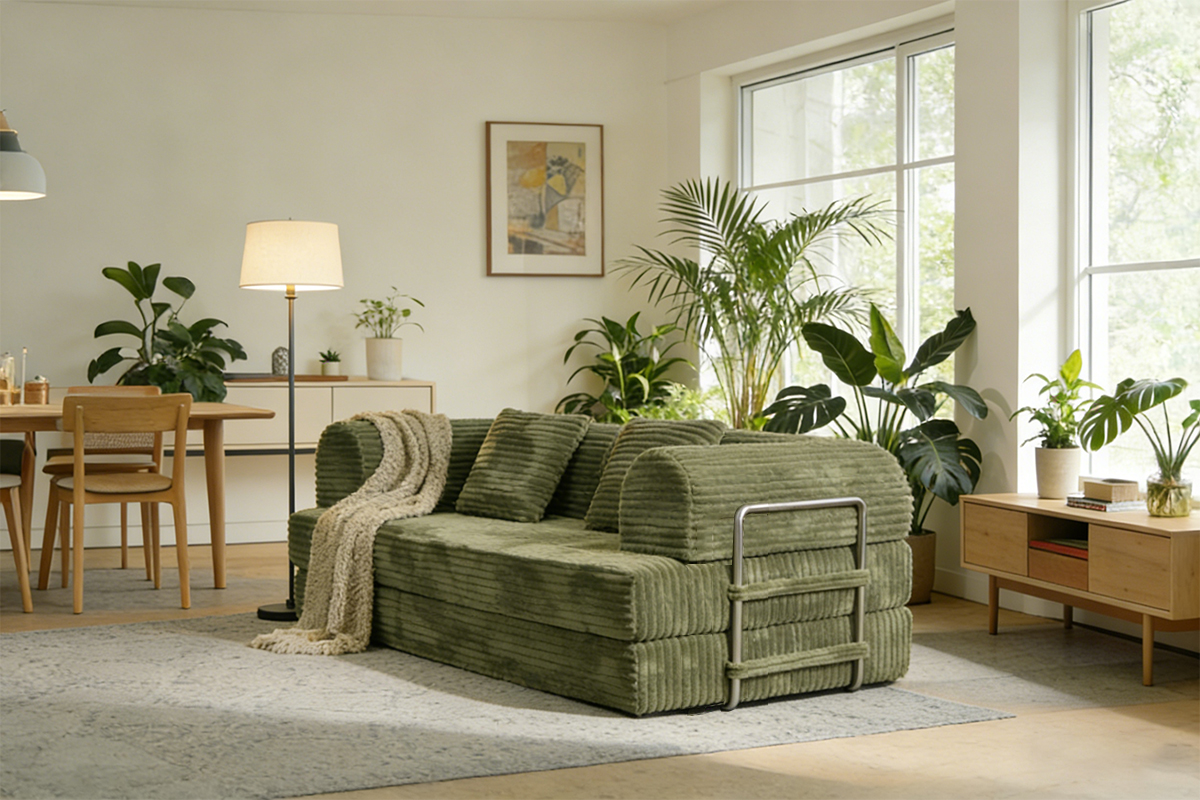
During maritime transport, containers endure extreme temperature fluctuations and high humidity. If the raw materials used in the sofa frames or upholstery fabrics retain residual moisture during manufacturing, the vacuum-sealed environment will trap this moisture. Once the container heats up during transit through tropical waters, condensation forms inside the plastic wrapping, creating an environment ripe for mold. To mitigate this risk, professional quality control protocols require strict moisture testing of timber frames and fabrics prior to compression.
Furthermore, the physical recovery of a compressed sofa depends heavily on foam density and spring construction. Utilizing a manufacturer with robust quality management systems ensures the foam maintains its resilient properties. For instance, production standards verified by global certifications like BSCI, ISO 9001, ISO 14001, and ISO 45001 ensure that materials are engineered to withstand prolonged compression without permanent cellular collapse.
Data/Solution Comparison
The following table outlines the specific risks associated with shipping compressed sofas under FOB terms, along with the corresponding mitigation strategies and responsible parties.
| Shipping Risk | Primary Cause | FOB Risk Allocation | Mitigation Strategy |
|---|---|---|---|
| Premature Expansion | Micro-punctures in vacuum bags during port loading | Seller liable if damaged before loading; Buyer liable post-loading | Use high-tensile, multi-layer puncture-resistant polymer films |
| Fabric & Foam Creasing | Extended compression duration during ocean freight | Buyer's risk | Limit compression duration; utilize high-resiliency polyurethane foam |
| Internal Mold & Odor | Trapped moisture within the vacuum-sealed packaging | Buyer's risk (unless proven as a manufacturing defect) | Implement strict pre-compression drying and insert industrial desiccant packs |
| Frame Distortion | Uneven pressure distribution during mechanical pressing | Buyer's risk post-loading | Utilize reinforced solid wood or metal inner frames designed for press-packing |
Frequently Asked Questions (FAQ)
Q1: How long can a compressed sofa remain in its vacuum-packed state during FOB shipping?
A1: It is highly recommended to unpack the sofa within 15 to 30 days of compression. Prolonged compression beyond this window increases the risk of permanent foam deformation and severe fabric creasing, which are not covered under FOB transit insurance once the cargo has been safely loaded.
Q2: Who is responsible if a compressed sofa container arrives with water damage under FOB terms?
A2: Under FOB terms, the buyer is responsible for ocean freight insurance. If the water damage occurred due to container leaks or maritime weather during transit, the buyer must file a claim with their marine insurance provider, as the seller's liability ended at the loading port.
Q3: How do manufacturing certifications assist in mitigating the risks of compressed furniture imports?
A3: Certifications such as ISO 9001 and BSCI guarantee that the factory adheres to standardized manufacturing processes. This includes utilizing tested foam densities and controlled drying chambers for wood frames, which directly reduces the risk of structural collapse and mold during long-distance transit.
Final Conclusion & Recommendations
Importing compressed sofas under FOB terms offers clear freight savings but demands strict attention to packaging and material quality to avoid transit-related damage. Buyers should partner with manufacturers that utilize high-tensile packaging films, high-density foam cores, and rigorous quality inspection protocols. Establishing clear agreements regarding maximum compression periods prior to port delivery is essential for ensuring successful product recovery upon arrival. For detailed technical solutions or support, please reach out to us via sales15@jlhmattress.cn.
About Us
Jinlongheng Furniture Co., Ltd., established in 1992, is a leading player in the sleep and upholstered furniture industry with over 800 employees and a massive 630,000 m² production base in Guangdong. The company specializes in the R&D and large-scale manufacturing of spring mattresses, upholstered beds, and compressed sofas, boasting a monthly production capacity of up to 120,000 mattresses. Holding prestigious certifications including ISO 9001, ISO 14001, ISO 45001, BS7177, and BSCI, the enterprise has successfully served over 337 global brands and 1,000 star hotel projects, including the Beijing Financial Street Ritz-Carlton Hotel and Velaa Private Island in the Maldives.

Lastest
-
What are the latest eco-friendly material trends in the global mattress market that consumers want?
2026-07-08 -
What are the safest payment terms to negotiate with a new manufacturer of compressed sofas?
2026-07-08 -
How do overseas manufacturers handle replacement parts for damaged headboards or frames of upholstered beds?
2026-07-08 -
What third-party audit reports should I ask for to verify a mattress factory's quality management?
2026-07-08 -
What is the average MOQ for importing compressed sofas, and how much does price drop with larger volume?
2026-07-08
SUBSCRIBE
INQUIRY