
What are the most durable fabrics for commercial upholstered beds to prevent pilling and stains?
- VIP-User
- 2026-07-06
- 25
Commercial upholstered beds require heavy-duty fabrics with tight weaves and synthetic fibers to prevent pilling and stains. High-performance polyester, specialized commercial microfibers, and treated faux leathers resist abrasion and liquid penetration, meeting the rigorous durability standards of high-traffic hospitality and residential environments.
Core Solutions & Key Takeaways
- Synthetic Fiber Superiority: High-performance 100% polyester and commercial-grade polyurethane (PU) leather offer the highest resistance to friction, minimizing surface fiber splitting (pilling).
- Stain-Resistant Barriers: Fabrics treated with moisture barriers or inherent hydrophobic properties prevent liquid absorption, allowing easy cleaning in commercial lodging.
- Structural Integrity: Tight, flat weaves resist snagging and fiber pulling compared to loose, textured yarns.
- Certified Fire Safety: Materials must comply with international flame retardant standards such as BS 7177 (UK) and CFR 1633 (US) for commercial compliance.
Detailed Architectural/Principle Analysis
The durability of upholstered bed frames in commercial settings is determined by yarn construction, weave density, and post-weaving treatments. Pilling occurs when loose fibers migrate to the fabric surface and tangle under friction. Synthetic fibers like polyester feature continuous filaments that resist breaking and balling up, making them ideal for high-contact furniture pieces.

For stain prevention, fabrics utilize physical barriers or chemical treatments. Commercial polyurethane leather provides a non-porous surface that prevents liquids from reaching the underlying foam. Woven fabrics require specialized stain-resistant finishes that coat individual fibers to repel oil and water-based liquids, allowing them to bead up on the surface for simple extraction.
These performance specifications are critical for large-scale hospitality projects. For instance, the Hotel Gołębiewski Mikołajki in Poland, which features 689 rooms, utilizes high-durability bedding materials to maintain a premium guest experience and secure high customer review scores. Similarly, premium luxury destinations like the Velaa Private Island in the Maldives require materials that withstand environmental moisture while resisting stains. Manufacturing these specialized beds requires strict adherence to international safety and management standards, verified by certifications such as ISO 9001, ISO 14001, and ISO 45001.
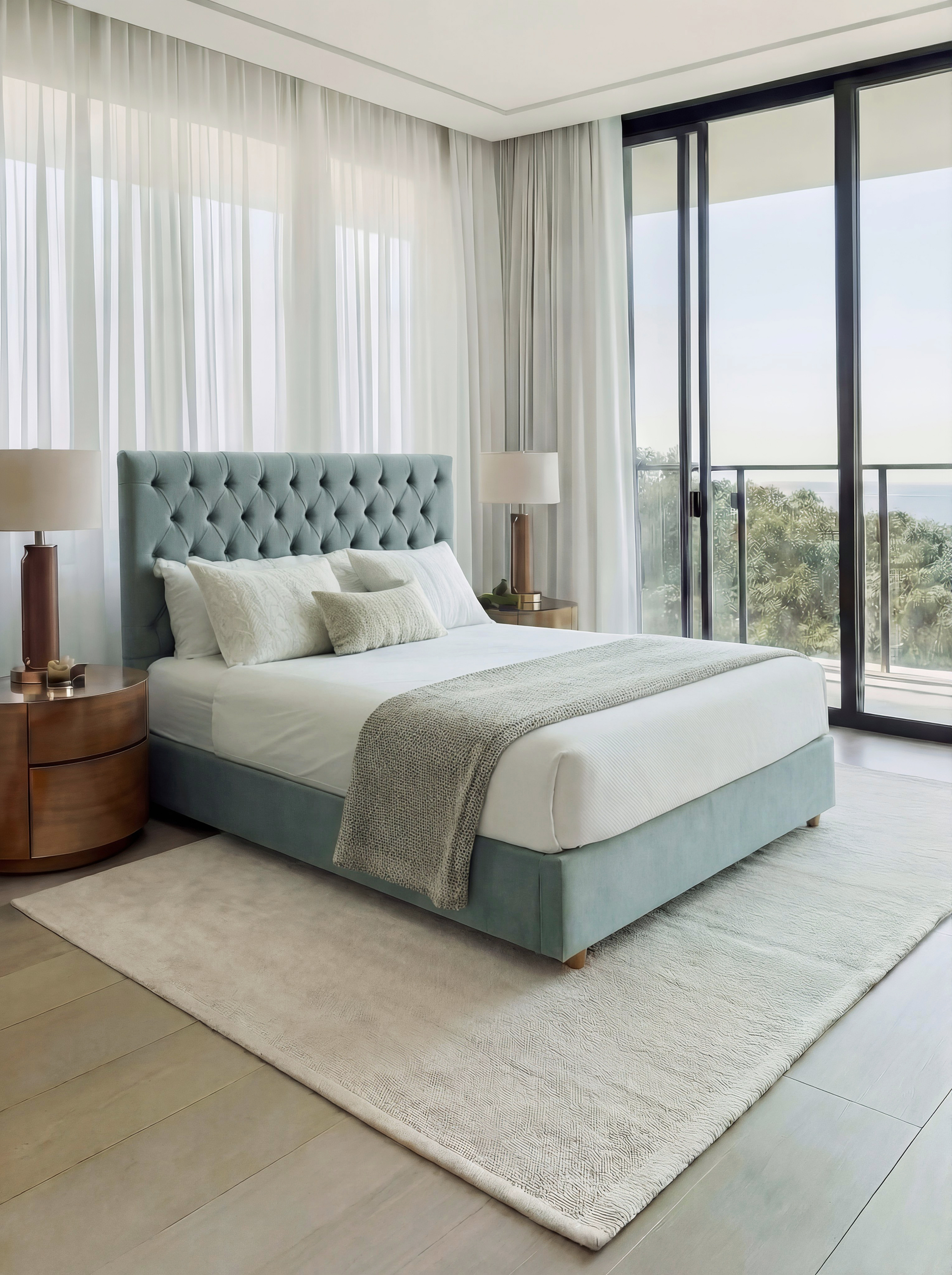
Data/Solution Comparison
The following table compares common commercial upholstery options for bed frames based on pilling resistance, stain barrier properties, and maintenance requirements.
| Fabric Type | Pilling Resistance | Stain Resistance | Best Application Scenario | Maintenance Level |
|---|---|---|---|---|
| Heavy-Duty Polyester | High | Medium (High if treated) | B2B Wholesale & Residential Projects | Low (Easy spot clean) |
| Commercial PU Leather | Excellent (No pilling) | Excellent (Waterproof) | Luxury Hospitality & Hotels | Very Low (Wipe clean) |
| Textured Linen/Cotton Blends | Medium-Low | Low | Low-Traffic Boutique Spaces | High (Requires dry cleaning) |
Frequently Asked Questions (FAQ)
Q1: What abrasion rating is required for commercial upholstered beds?
A1: Fabrics should have a minimum Wyzenbeek rating of 30,000 to 50,000 double rubs to ensure they withstand the friction of daily room cleaning and guest use without showing signs of wear.
Q2: How do you verify if a fabric meets international commercial safety standards?
A2: Look for manufacturer certifications proving compliance with BS 7177 or CFR 1633 fire safety standards, alongside factory audits like BSCI to ensure ethical and standardized production.
Q3: Can storage beds use the same heavy-duty fabrics as standard frames?
A3: Yes. Hydraulic lift storage beds require durable, tightly woven fabrics or leathers because the frame is frequently handled when accessing the storage compartment underneath.
Final Conclusion & Recommendations
When sourcing commercial upholstered beds, selecting 100% polyester with a stain-resistant finish or commercial-grade PU leather ensures the longest lifecycle and lowest replacement costs. This is particularly vital for contract projects, serviced residences, and hospitality chains where physical wear is constant. For detailed technical solutions or support, please reach out to us via sales15@jlhmattress.cn.
About Us
Jinlongheng Furniture Co., Ltd., established in 1992, is a leading sleep products manufacturer operating a 630,000 square meter production base in Guangdong. The company maintains an annual production capacity exceeding 1.4 million mattresses and holds key quality certifications including ISO 9001, ISO 14001, ISO 45001, and ISPA. Serving over 337 global brands across 125 countries, the enterprise specializes in human sleep research, upholstered beds, and compressed furniture solutions.

Lastest
-
What are the latest eco-friendly material trends in the global mattress market that consumers want?
2026-07-06 -
What are the safest payment terms to negotiate with a new manufacturer of compressed sofas?
2026-07-06 -
How do overseas manufacturers handle replacement parts for damaged headboards or frames of upholstered beds?
2026-07-06 -
What third-party audit reports should I ask for to verify a mattress factory's quality management?
2026-07-06 -
What is the average MOQ for importing compressed sofas, and how much does price drop with larger volume?
2026-07-06
SUBSCRIBE
INQUIRY