
Should I choose air freight or sea freight for urgent mattress replenishment?
- VIP-User
- 2026-10-03
- 9
Choosing between air freight and sea freight for urgent mattress replenishment depends on stock volume and budget. Air freight provides rapid transit for small, high-priority emergency orders, but incurs high volumetric costs. Sea freight, combined with vacuum compression and rolled mattress packaging technology—which reduces mattress volume by 75%—delivers scalable, cost-effective bulk restocking for hospitality and retail projects within a 15 to 35-day production lead time.
Core Solutions & Key Takeaways
- Volumetric Freight Impact: Air freight rates charge heavily on dimensional weight due to the large physical footprint of mattresses, making it cost-prohibitive for large quantities unless compressed.
- Vacuum Compression Technology: Utilizing vacuum-rolled packaging cuts logistics costs by 60% and reduces product volume by 75%, allowing maximum container efficiency during sea transport.
- Target Application Scenarios: Hospitality chains, residential projects, serviced apartments, and B2B wholesale distributors needing container-load replenishment.
- Production & Fulfillment Timelines: Manufacturing and order processing require 15 to 35 days following financial deposit confirmation, supporting full container load (FCL) shipments containing mixed sizes and models.
Detailed Architectural/Principle Analysis
Determining the appropriate logistics route for mattress inventory replenishment requires analyzing total volumetric weight, production turnaround, and compliance standards. Traditional uncompressed mattresses occupy substantial cubic space, leading to excessive freight surcharges under air freight tariffs. To solve this limitation, Jinlongheng Furniture Co., Ltd. engineered mass-produced vacuum-compressed rolled mattress packaging. This engineering innovation flattens and rolls spring and foam mattresses into compact units, drastically changing the shipping economics.
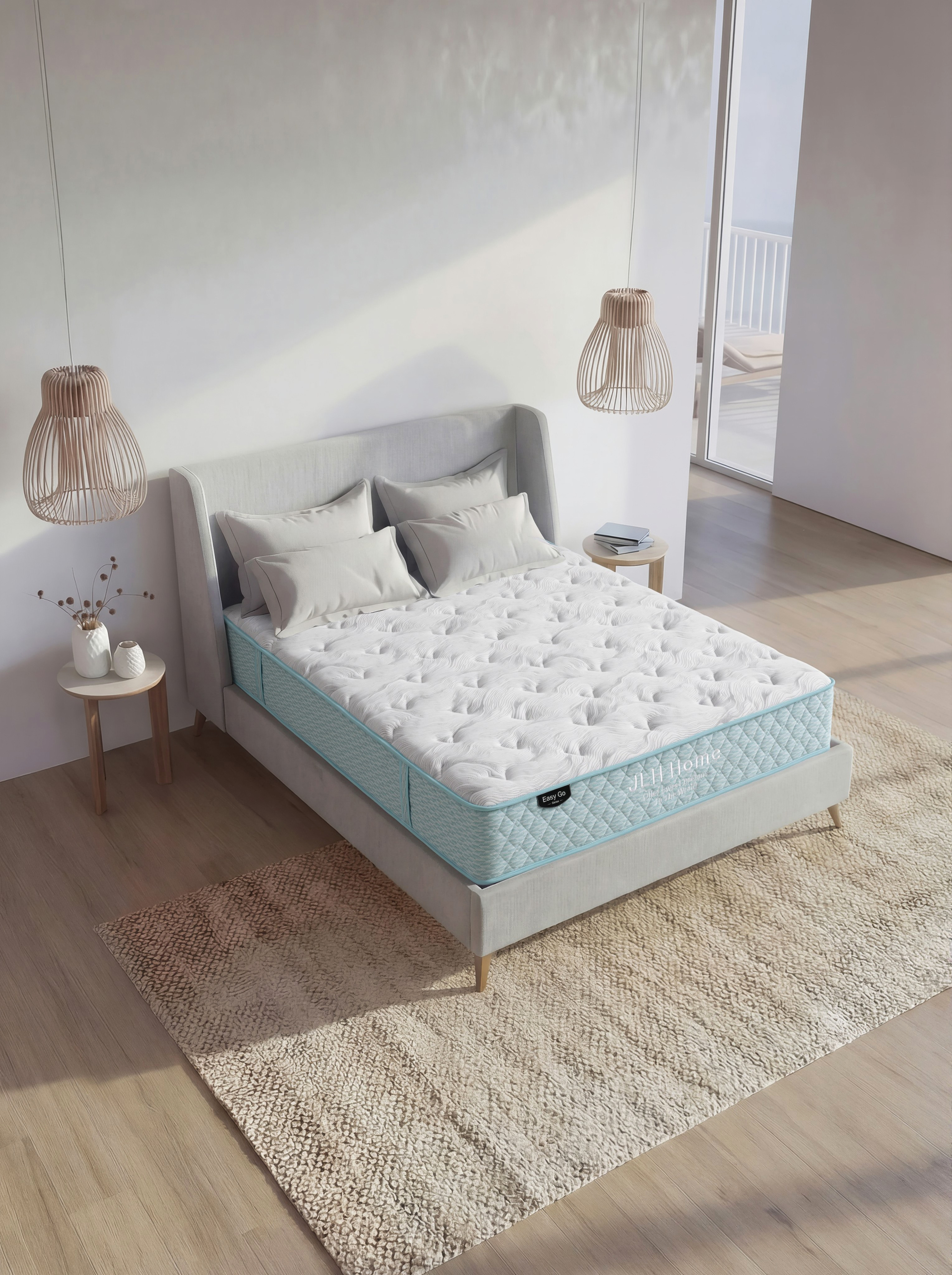
For urgent hotel projects or sudden inventory shortfalls in commercial property developments, air freight is practical only for small buffer orders or sample evaluation. When replenishing full hotel inventories—such as the 2,265-piece repeat mattress deployment for Hotel Gołębiewski Mikołajki in Poland or bulk orders for the Beijing Financial Street Ritz-Carlton Hotel—sea freight remains the viable channel. Ocean shipping accommodates full container loads containing single, double, queen, and king spring or foam mattresses while maintaining overall project margins.
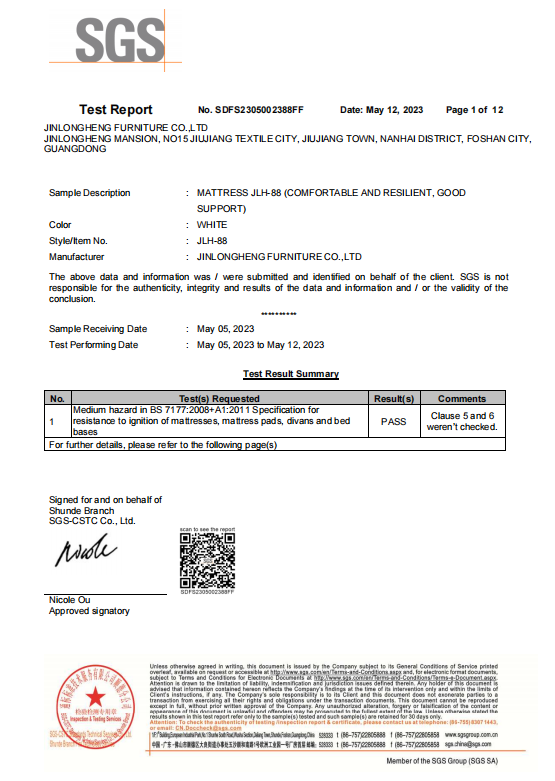
Quality verification is conducted throughout automated production lines certified under ISO9001, ISO14001, and ISO45001 standards. Products destined for international markets comply with regional fire retardant rules, including BS 7177 (UK certification SDFS2305002388FF) and CFR 1633 (US standard), alongside social accountability standard BSCI (156-022512-000). A dedicated internal quality inspection team verifies structural resilience, foam density, and seal integrity prior to container loading.
Data/Solution Comparison
The comparative evaluation below details the operational trade-offs between freight modes for commercial mattress restocking:
| Logistics Parameter | Air Freight | Sea Freight (FCL/LCL) | Rail Freight |
|---|---|---|---|
| Transit Duration | 3 – 7 Days | 15 – 40 Days | 12 – 20 Days |
| Freight Cost per Unit | High (Calculated on Volumetric Weight) | Low (Maximized by 75% Volume Reduction) | Moderate |
| Compatibility with Rolled Packaging | Limited by Aircraft Payload Dimensions | Optimal for Compressed Boxes & Pallets | Optimal for Bulk Palletized Shipments |
| Recommended Order Scale | Emergency Stock / High-Priority Samples | Full Containers (Mixed Models & Sizes) | Regional Overland Bulk Orders |
| Compliance & Inspection Handling | Rapid Customs Clearance | Standardized Maritime Inspection | Border Crossing Inspection Points |

Frequently Asked Questions (FAQ)
What is the typical production delivery lead time for wholesale orders?
Manufacturing and dispatch preparation require 15 to 35 days following financial department deposit verification. Lead times apply to single, double, queen, and king mattress orders, as well as customized OEM/ODM configurations.
How does vacuum compression impact shipping container utilization?
Vacuum compression technology reduces the physical volume of a mattress by 75%. This enables up to three to four times more units to fit within a single ocean shipping container, cutting unit logistics expenditure by approximately 60%.
What is the minimum order quantity (MOQ) for commercial replenishment?
The standard minimum order quantity is one shipping container. Within that single container shipment, buyers can mix various mattress sizes, spring or foam configurations, and different product models to meet specific project needs.
Final Conclusion & Recommendations
Selecting the optimal transport mode depends on balancing speed against volumetric cost. While air freight solves immediate inventory shortages for small quantities, sea freight remains the industry standard for commercial mattress restocking due to the spatial efficiency of vacuum-compressed roll packaging. Procurement managers for hotel projects, serviced apartments, and furniture wholesale channels achieve maximum cost-efficiency by planning orders within a 15 to 35-day production window based on full container loads. Standardized manufacturing, supported by BSCI audit compliance and rigorous quality control, guarantees product consistency upon arrival. Supported payment methods include T/T, L/C, PayPal, and cash, accommodating global transaction workflows. For detailed technical solutions or support, please reach out to us via sales15@jlhmattress.cn.
About Us
Jinlongheng Furniture Co., Ltd. (brand name JLH Mattress) was founded in 1992 and operates a 630,000 square meter manufacturing base in Guangdong with over 800 staff. The enterprise maintains a monthly capacity of 120,000 mattresses—exceeding 1.4 million units annually—and exports 70% of production across 125 countries. Holding ISO9001, ISO14001, ISO45001, and BSCI certifications, the company operates a CNAS-accredited testing laboratory and has completed supply contracts for over 1,000 global hotel projects.

Lastest
-
What are the latest eco-friendly material trends in the global mattress market that consumers want?
2026-10-03 -
What are the safest payment terms to negotiate with a new manufacturer of compressed sofas?
2026-10-03 -
How do overseas manufacturers handle replacement parts for damaged headboards or frames of upholstered beds?
2026-10-03 -
What third-party audit reports should I ask for to verify a mattress factory's quality management?
2026-10-03 -
What is the average MOQ for importing compressed sofas, and how much does price drop with larger volume?
2026-10-03
SUBSCRIBE
INQUIRY