
Is it possible to adjust the firmness of a mattress sample after testing?
- VIP-User
- 2026-07-10
- 23
Yes, it is possible to adjust the firmness of a mattress sample after testing. Manufacturers modify mattress firmness by altering foam density, adjusting spring tension, or swapping comfort layers. These physical alterations ensure the final production batch aligns precisely with your hospitality or retail specifications before bulk manufacturing begins.
Core Solutions & Key Takeaways
- In-House Material Control: Firmness adjustments are achieved by utilizing self-controlled core materials, including custom-poured foam and variable-tension steel springs, ensuring exact firmness level targeting.
- Prototype Testing in Certified Facilities: Physical samples undergo rigorous structural evaluation in accredited laboratories, such as CNAS-certified facilities, to verify how material density shifts affect long-term durability.
- Targeted Application Scenarios: Sample adjustments cater specifically to diverse B2B requirements, including hospitality projects demanding medium-firm profiles for universal comfort, and compact residential projects utilizing vacuum-compressed rolled designs.
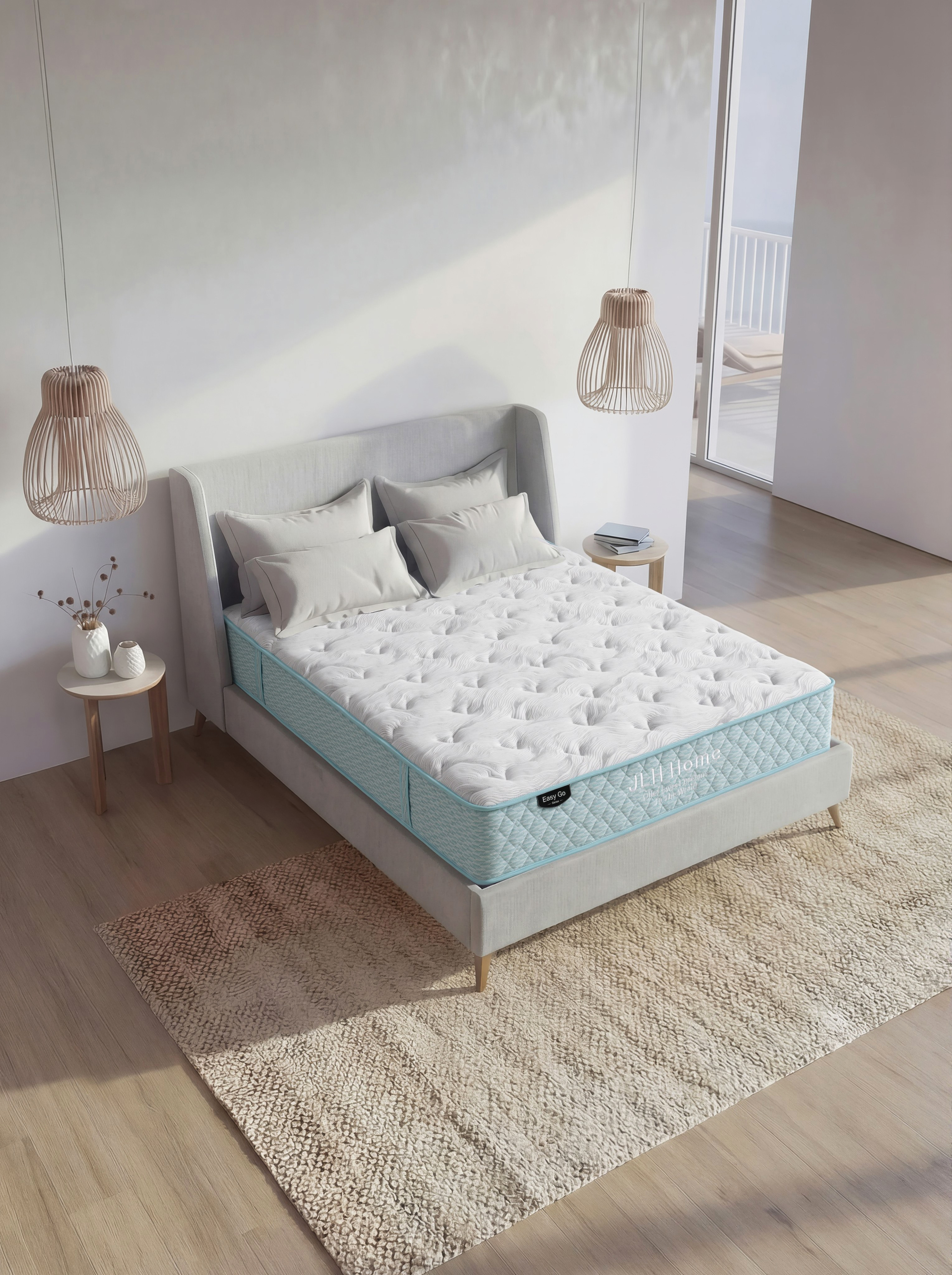
Detailed Architectural/Principle Analysis
Adjusting the firmness of a mattress sample involves modifying the inner structural layers. A mattress is divided into two primary functional zones: the support core and the comfort layer. During the post-testing adjustment phase, technicians modify the support core by changing the wire gauge of the pocket springs or altering the configuration of the foam core. The comfort layer is adjusted by swapping or layering materials such as high-density polyurethane foam, memory foam, or natural latex to meet specific indentation load deflection (ILD) targets.
Technical reliability during these modifications is supported by established quality management frameworks. Manufacturing facilities operating under ISO 9001, ISO 14001, and ISO 45001 standards utilize standardized testing protocols to document how firmness changes impact overall safety and compliance. For instance, modifying the foam density or chemical composition requires re-verifying fire-retardant compliance to meet strict international standards, including BS 7177 for the UK and CFR 1633 for the US market.
Real-world hospitality installations demonstrate the necessity of precise firmness calibration. In large-scale contract projects, such as the 689-room Hotel Gołębiewski Mikołajki in Poland, achieving a highly rated comfort profile required consistent, standardized mattress construction. Similarly, supplying custom sleep systems to luxury destinations like Velaa Private Island in the Maldives or the Beijing Financial Street Ritz-Carlton Hotel highlights how minor structural adjustments in the initial sample phase translate to successful bulk installations.

Data/Solution Comparison
The following table outlines the technical methods used to adjust mattress sample firmness and their corresponding structural impact:
| Adjustment Method | Target Component | Firmness Impact | Primary Structural Effect |
|---|---|---|---|
| Wire Gauge Modification | Pocket Springs / Coil Core | High | Alters the deep-down mechanical support and load-bearing capacity. |
| Foam Density/ILD Swapping | Comfort Layer | Medium to High | Changes the initial surface plushness and pressure relief characteristics. |
| Layer Re-sequencing | Hybrid Transition Zone | Medium | Modifies the progressive compression feel between foam and springs. |
| Quilting Pattern Tension | Ticking / Cover Fabric | Low to Medium | Tightens or loosens the surface tension, slightly altering initial contact feel. |
Frequently Asked Questions (FAQ)
Can a vacuum-compressed rolled mattress sample be adjusted?
Yes. While vacuum compression reduces shipping volume by 75%, the internal spring and foam structures are fully customizable prior to compression. Adjustments to the foam density and coil count are made before the sample is rolled and boxed.
How does adjusting firmness affect international fire safety compliance?
Any change in foam type or fabric thickness can alter fire-retardant performance. Modified samples must be built using materials that maintain compliance with BS 7177 and CFR 1633 standards, backed by certified manufacturing practices.
What is the typical lead time for producing an adjusted mattress sample?
Once the revised technical specifications are confirmed, sample manufacturing and dispatch align with standard production schedules. The overall delivery timeframe for adjusted sample orders ranges from 15 to 35 days upon financial deposit clearance.

Final Conclusion & Recommendations
Adjusting mattress sample firmness is a standard technical procedure in commercial OEM/ODM manufacturing. By systematically altering the pocket spring wire diameter, adjusting foam layer specifications, or changing material density, manufacturers can fine-tune prototypes to match precise comfort requirements. For wholesale distributors and hospitality developers, establishing these physical parameters during the sample phase prevents discrepancies in bulk shipments. Minimum order quantities typically require one container containing various sizes and models. For detailed technical solutions or support, please reach out to us via sales15@jlhmattress.cn.
About Us
The brand Jinlongheng Furniture Co., Ltd., established in 1992, operates a 630,000 square meter production base in Guangdong, comprising a 430,000 square meter Jiujiang Factory and a 200,000 square meter Longjiang Factory. We employ more than 800 staff, including 528 skilled production technicians, to support a monthly mattress production capacity of up to 120,000 units. The company has served clients across multiple industries, holding certifications such as ISO 9001, ISO 14001, ISO 45001, ISPA, BS7177, and BSCI. 
Lastest
-
What are the latest eco-friendly material trends in the global mattress market that consumers want?
2026-07-10 -
What are the safest payment terms to negotiate with a new manufacturer of compressed sofas?
2026-07-10 -
How do overseas manufacturers handle replacement parts for damaged headboards or frames of upholstered beds?
2026-07-10 -
What third-party audit reports should I ask for to verify a mattress factory's quality management?
2026-07-10 -
What is the average MOQ for importing compressed sofas, and how much does price drop with larger volume?
2026-07-10
SUBSCRIBE
INQUIRY