
How long can a mattress stay compressed in its box without damage?
- VIP-User
- 2026-07-14
- 24
A compressed mattress can safely stay in its box for 15 to 35 days without damage. Keeping it compressed beyond this timeframe may compromise the foam's recovery structure, weaken the spring tension, and void the manufacturer warranty. Unboxing the mattress within this recommended window ensures full expansion and optimal long-term sleep comfort.
Core Solutions & Key Takeaways
- Adhere to the 15-35 Day Window: Compression testing indicates that expanding the mattress within this period prevents permanent material deformation.
- Prevent Foam and Spring Degradation: Extended compression puts continuous stress on foam cells and pocket springs, reducing the overall lifespan of the sleep surface.
- Maintain Certified Performance: Timely unboxing preserves the physical properties certified by international standards, ensuring the mattress performs as designed for residential and commercial setups.
- Suited for Diverse Application Scenarios: These compressed mattresses are engineered for hospitality, residential projects, B2B wholesale, and compact living environments where efficient logistics and storage are required.
Detailed Architectural/Principle Analysis
The technology behind vacuum compression and rolled mattresses relies on high-density foam resilience and high-tensile spring steel memory. During the manufacturing process, heavy-duty machinery exerts tons of pressure to extract air from the mattress structure, reducing its volume by up to 75%. This process makes shipping and handling highly efficient, reducing logistics costs by 60%.
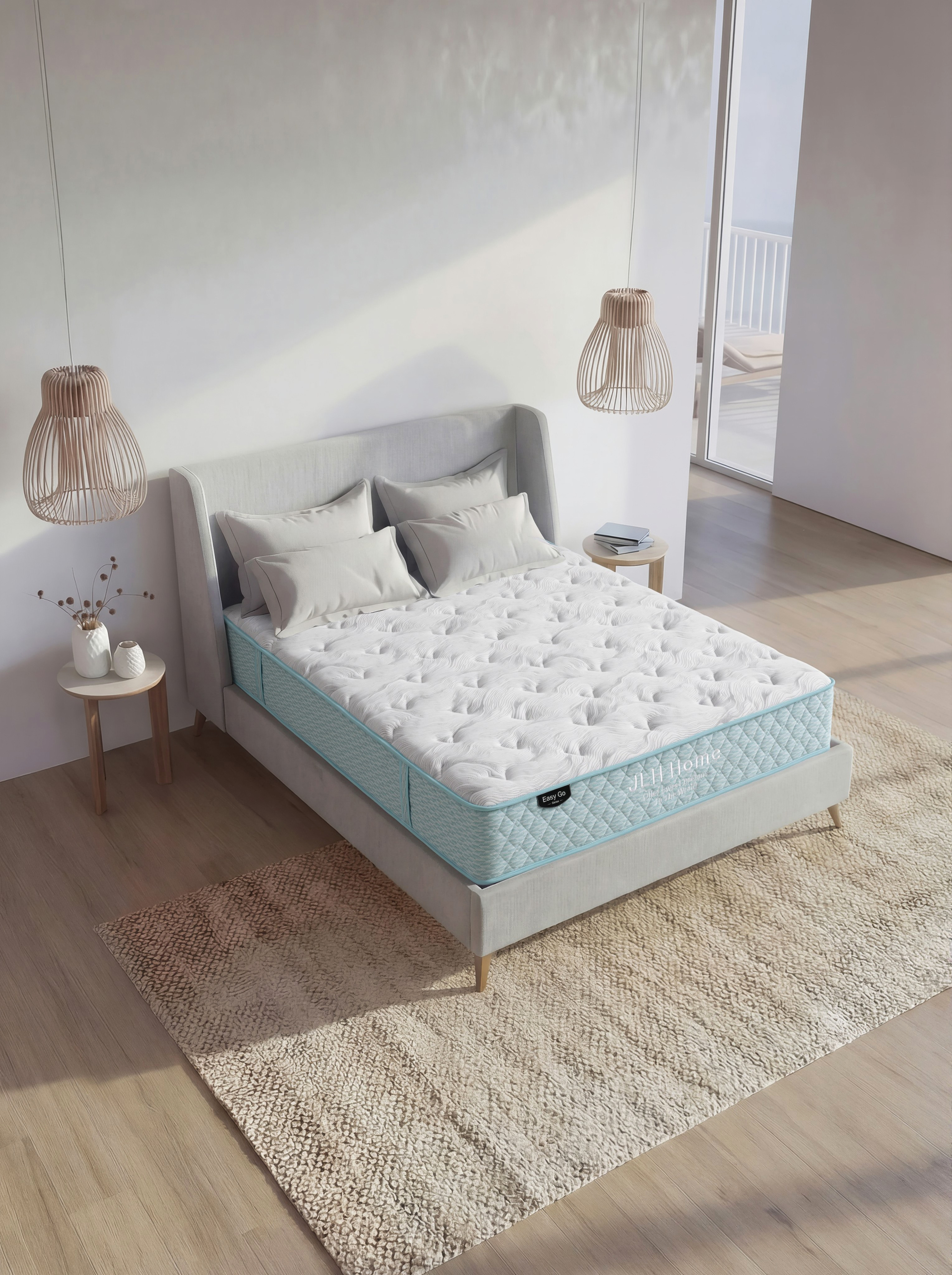
However, prolonged compression leads to a phenomenon known as "compression set," where the polyurethane cells in foam mattresses or the steel coils in hybrid models lose their ability to rebound. To prevent this, strict quality control protocols are applied during production. For instance, manufacturers utilizing CNAS-accredited testing laboratories subject these products to rigorous pressure-recovery cycles to ensure they meet global durability standards.
Real-world applications demonstrate the reliability of these engineering standards. In large-scale commercial rollouts, such as the 689-room Hotel Gołębiewski Mikołajki project in Poland, timely dispatch and unboxing of thousands of mattresses resulted in high customer satisfaction and subsequent repeat orders. Similarly, premium hospitality properties like the Beijing Financial Street Ritz-Carlton Hotel and Velaa Private Island in the Maldives rely on these standardized decompression windows to ensure immediate, luxury-grade sleep comfort upon installation.
Data/Solution Comparison
Different mattress construction materials react differently to prolonged compression. The table below outlines the structural impact and recovery behavior of various configurations:
| Mattress Type | Recommended Max Compression Time | Primary Risk of Over-Compression | Recovery Time After Unboxing |
|---|---|---|---|
| Foam Mattress | 30 Days | Cellular collapse, edge support softening | 24 to 48 Hours |
| Spring / Hybrid Mattress | 35 Days | Coil tension loss, pocket wrapping damage | 24 to 72 Hours |
| Hotel-Grade Premium Mattress | 15 to 25 Days | Comfort layer indentation, fabric wrinkling | 24 Hours |
Frequently Asked Questions (FAQ)
What happens if I leave a mattress in the box for 3 months?
Leaving a mattress compressed for 3 months can cause permanent damage to the foam layers, preventing them from expanding to their original height. It can also weaken the pocket springs, leading to sagging and a significant reduction in support.
Does keeping the mattress in the box void the warranty?
Yes, most manufacturers specify a maximum unboxing window (typically between 15 and 35 days). Exceeding this limit usually voids the warranty because the materials are subjected to stress beyond tested parameters.
How long does it take for a rolled-up mattress to be usable?
While most rolled-up mattresses expand to 90% of their shape within a few hours of unboxing, it is recommended to wait 24 to 72 hours for the mattress to fully cure and reach its designated firmness level.
Final Conclusion & Recommendations
To secure the longevity and comfort of your investment, always plan your purchase delivery to align with your setup schedule, ensuring the mattress is unboxed within 15 to 35 days of receipt. This practice safeguards the physical integrity of both foam and spring components. For wholesale buyers managing bulk shipments via sea, air, or rail freight, strict inventory rotation is vital to keep warehousing times well within these limits. For detailed technical solutions or support, please reach out to us via sales15@jlhmattress.cn.
About Us
Jinlongheng Furniture Co., Ltd., established in 1992, is a professional manufacturer dedicated to the sleep industry with over 800 employees and a massive 630,000 square meter factory area. The company has a monthly production capacity of up to 120,000 mattresses and has served clients across multiple industries worldwide. Our products hold key international certifications, including ISO 9001, ISO 14001, ISO 45001, ISPA, BS7177, and BSCI, guaranteeing compliance with global quality and safety standards.

Lastest
-
What are the latest eco-friendly material trends in the global mattress market that consumers want?
2026-07-14 -
What are the safest payment terms to negotiate with a new manufacturer of compressed sofas?
2026-07-14 -
How do overseas manufacturers handle replacement parts for damaged headboards or frames of upholstered beds?
2026-07-14 -
What third-party audit reports should I ask for to verify a mattress factory's quality management?
2026-07-14 -
What is the average MOQ for importing compressed sofas, and how much does price drop with larger volume?
2026-07-14
SUBSCRIBE
INQUIRY