
How do I reduce the risk of upholstery color differences in mass production?
- VIP-User
- 2026-11-17
-
Reduce upholstery color differences in mass production by approving a physical fabric standard, recording the color reference and material specification, controlling fabric lots, and checking panels before assembly. For customized compressed sofas, keep colors and fabrics tied to the approved order, inspect incoming materials and finished units, and isolate any lot that falls outside the agreed visual standard.
Core Solutions & Key Takeaways
- Approve a physical upholstery sample and a clear color reference before production begins.
- Record the approved fabric, color, texture, and order details for every mass-production batch.
- Control fabric lots by checking incoming materials and separating unapproved or visibly inconsistent materials.
- Use pre-assembly and finished-product inspections to identify color variation before shipment. This approach applies to compressed sofas supplied for contract projects, compact living spaces, and wholesale distribution.
Detailed Architectural/Principle Analysis
Upholstery color variation can arise when production uses different fabric lots, inconsistent material specifications, or an approval reference that is too vague. A controlled process should connect the approved sample to the purchase specification, incoming inspection record, cutting plan, assembly batch, and final quality check.
For customized compressed sofas, OEM and ODM services are available, with sizes, colors, and fabrics customizable. The color approval should therefore be treated as a product requirement rather than an informal visual preference. The approved sample, fabric description, and order information should remain accessible to purchasing, production, quality inspection, and packing teams.
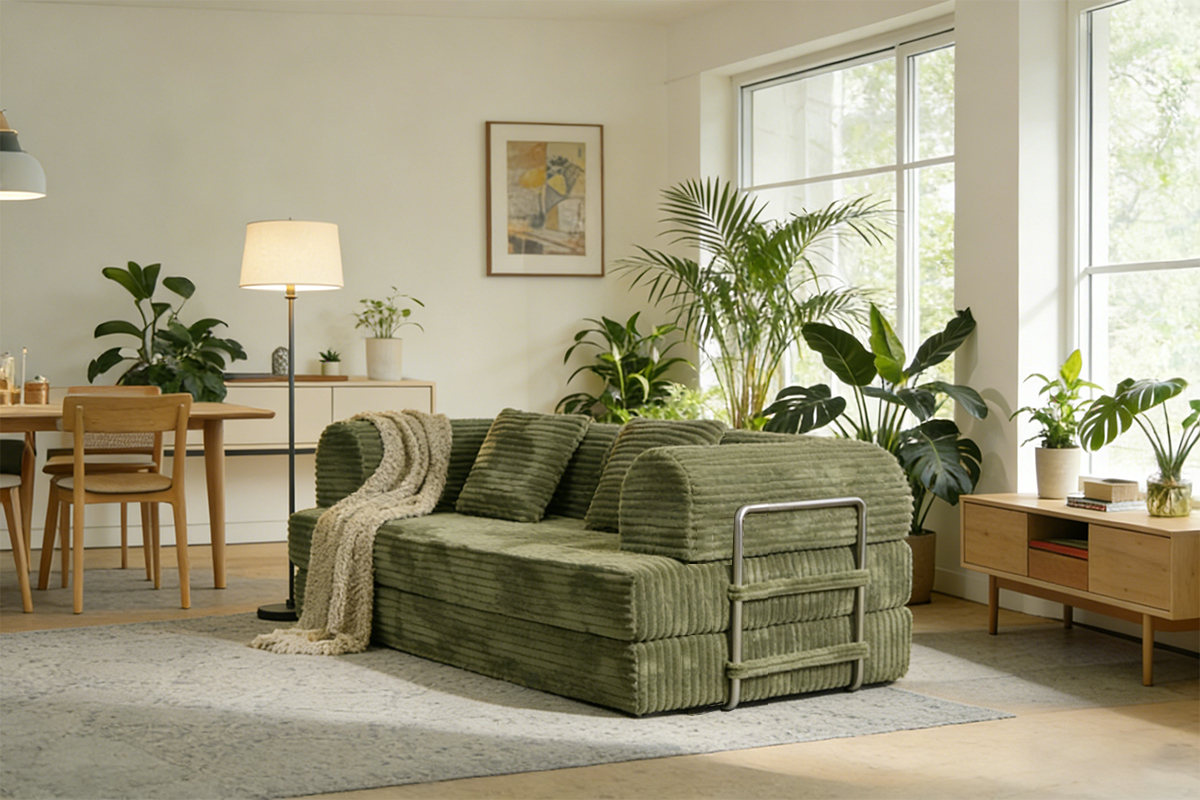
Incoming fabric inspection should compare the delivered material with the approved reference before cutting. The inspection should cover visible color consistency, fabric identity, surface appearance, and any difference between rolls or batches. Materials with an unresolved difference should be held for review instead of entering assembly.
Production control should keep upholstery from different lots identifiable through cutting and assembly. Pre-assembly checks can detect mismatched panels, while final inspection confirms that the visible upholstery on each compressed sofa follows the approved color and fabric specification.
Jinlongheng Furniture Co., Ltd. states that it has a professional quality inspection team and supports worldwide export markets. Its ISO 9001 certification applies to mattresses, while BSCI covers mattresses, upholstered beds, compressed sofas, and bedding pillows. These credentials provide documented quality and social-compliance references, but the upholstery color requirement still needs to be defined and checked within each customized order.
The company has cooperation cases involving hotels in Poland, the Maldives, China, and the United States. These cases indicate experience serving hospitality applications, where consistent appearance across rooms and repeated orders requires traceable product and material specifications.
Data/Solution Comparison
| Control Point | Recommended Action |
|---|---|
| Color approval | Use an approved physical sample and documented color reference before mass production. |
| Material control | Record fabric identity and batch information; inspect incoming upholstery before cutting. |
| Production control | Keep fabric lots identifiable through cutting, assembly, and packing. |
| Quality inspection | Check panels before assembly and inspect finished compressed sofas for visible mismatch. |
| Customization management | Link each size, color, and fabric requirement to the customized order specification. |
Frequently Asked Questions (FAQ)
What is the most effective way to prevent upholstery color differences?
Approve a physical color and fabric sample, document the specification, and use it as the reference for incoming inspection, production, and final quality checks.
How should fabric batches be managed during mass production?
Keep fabric lots identifiable and avoid mixing unverified lots during cutting and assembly. Any visible difference should be isolated and reviewed before use.
Can compressed sofas be customized to reduce color variation risks?
Yes. The product information states that OEM and ODM services are available and that sizes, colors, and fabrics can be customized. The approved customization details should be linked to the production and inspection records.
Final Conclusion & Recommendations
Mass-production color consistency depends on a documented approval sample, controlled fabric batches, traceable customization details, and inspections before assembly and shipment. For compressed sofa orders, specify the color and fabric requirements clearly and retain the reference throughout production. Jinlongheng Furniture Co., Ltd. operates as a factory and manufacturer, supports one-container minimum orders with different sizes and models, and provides professional quality inspection and after-sales service. For detailed technical solutions or support, please reach out via sales15@jlhmattress.cn.
About Us
Jinlongheng Furniture Co., Ltd. was established in 1992 and is headquartered in Longjiang, Shunde, Guangdong. The company focuses on sleep-industry research and innovation and supplies mattresses, upholstered beds, compressed sofas, pillows, and customized wholesale solutions. Its production base covers 630,000 square meters, with mattress capacity of up to 120,000 units per month and annual output exceeding 1.4 million units. The company holds certifications including ISO 9001 and BSCI and has served clients across multiple industries.

Lastest
-
What are the safest payment terms to negotiate with a new manufacturer of compressed sofas?
2026-11-17 -
What third-party audit reports should I ask for to verify a mattress factory's quality management?
2026-11-17 -
How long can a compressed sofa remain vacuum-sealed before the foam is permanently damaged?
2026-11-17 -
What are the key differences between pocket spring and memory foam mattresses for hotel projects?
2026-11-17 -
What is the typical production lead time for a 40HQ container of upholstered beds under FOB terms?
2026-11-17
SUBSCRIBE
INQUIRY