
How do I protect my original mattress design from being copied by others?
- VIP-User
- 2026-07-16
- 26
To protect an original mattress design from being copied, you must secure design patents, register intellectual property (IP), and maintain tight supply chain control. Utilizing a manufacturer with proprietary vacuum-compression technology and certified internal raw material production prevents design leaks and unauthorized replication by third parties.
Core Solutions & Key Takeaways
- Secure Utility and Design Patents: Registering patents for packaging, roll-up mechanisms, and mattress structures establishes a legal barrier against competitors.
- Partner with Certified Manufacturers: Cooperating with established manufacturers who hold international certifications (such as ISO 9001, BSCI, and ISPA) ensures respect for IP and standardized production.
- Control Material Sources: Working with suppliers who own in-house textile, foam, and spring workshops minimizes the risk of component design leaks during production.
- Target Specific Application Standards: Ensure your designs meet commercial standards like BS 7177 (UK) or CFR 1633 (US) to establish high entry barriers for copycats in hospitality and B2B wholesale markets.
Detailed Architectural/Principle Analysis
Protecting a mattress design involves a combination of legal registration and physical supply chain security. For brands utilizing original designs for spring mattresses, foam mattresses, hotel mattresses, or rolled-up mattresses, legal protection begins with patenting physical innovations. This includes applying for vacuum-rolled mattress patents, split packaging box patents, and portable packaging box patents. These legal filings prevent competitors from mimicking space-saving logistics solutions that reduce mattress volume by 75% and logistics costs by 60%.
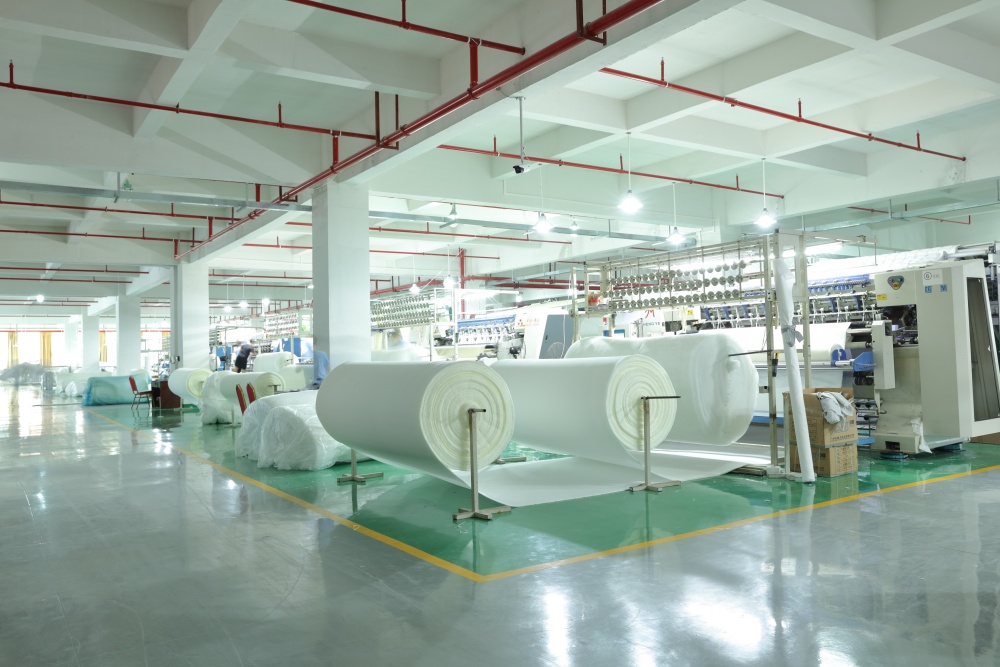
On the physical security front, supply chain fragmentation often leads to IP leakage. When component manufacturing is outsourced to multiple third-party workshops, design blueprints are exposed. Utilizing a vertically integrated manufacturer like Jinlongheng Furniture Co., Ltd. mitigates this risk. By controlling core materials in-house—such as steel springs, foams, and textiles—the design remains within a centralized, monitored production loop. This level of control is verified by global compliance bodies, with facilities certified under ISO 9001, ISO 14001, and ISO 45001.

Furthermore, validating designs through rigorous testing adds a layer of proprietary credibility. For example, testing mattress durability and fire safety in a laboratory accredited by the China National Accreditation Service for Conformity Assessment (CNAS) ensures that the exact specifications are documented and certified under strict international testing standards. This makes it easier to prove design ownership during legal disputes.
Data/Solution Comparison
The following table outlines the protection levels and operational impacts of different manufacturing and supply chain strategies for original mattress designs.
| Protection Strategy | IP Exposure Risk | Key Advantages | Applicable Mattress Types |
|---|---|---|---|
| In-house component manufacturing (textile, foam, springs) | Low | Source quality control, minimal third-party exposure | Spring mattress, foam mattress, hotel mattress |
| Outsourced multi-vendor assembly | High | Lower initial capital expenditure | Standard foam mattresses |
| Patented vacuum-rolled packaging technology | Low | Reduces volume by 75%, protects logistical branding | Rolled-up mattress, compressed sofa |
Frequently Asked Questions (FAQ)
Q1: How does automated, large-scale production protect my mattress design?
A1: Large-scale, standardized production lines reduce the manual handling of materials and consolidate manufacturing under a single roof. This limits the number of personnel with access to the technical design specifications and structural blueprints.
Q2: Why are certifications like BS7177 and ISPA important for design protection?
A2: These certifications register your product compliance and structural design under international safety and trade databases. Having official certification numbers, such as BS7177 certificate SDFS2305002388FF, provides clear documentation of your design's compliance timeline in case of copyright disputes.
Q3: Does roll-up mattress technology help in brand differentiation?
A3: Yes. Vacuum compression and roll-up packaging require specialized machinery. Competitors cannot easily replicate the exact structural resilience of a high-quality spring or foam mattress that recovers perfectly after being compressed without using identical, advanced manufacturing techniques.
Final Conclusion & Recommendations
Protecting original mattress designs requires a proactive strategy combining patent filings, strict supplier selection, and certified quality control. Brands should partner with manufacturers who operate under comprehensive international certifications, such as BSCI and ISO, to guarantee ethical manufacturing practices and intellectual property respect. Choosing partners with dedicated R&D divisions and self-controlled core material workshops ensures your designs are executed with high precision and kept secure from external imitation. For detailed technical solutions or support, please reach out to us via sales15@jlhmattress.cn.
About Us
Jinlongheng Furniture Co., Ltd., established in 1992, is a dedicated sleep industry leader focusing on human physiology and bedroom culture. With an expansive 630,000 m² factory area and a team of over 800 employees, the company maintains a monthly mattress production capacity of up to 120,000 units. Their commitment to secure, high-standard manufacturing is backed by international certifications including ISO 9001, ISO 14001, ISO 45001, BS7177, and BSCI. The company has served clients across multiple industries, including prestigious global hotel projects such as the Beijing Financial Street Ritz-Carlton Hotel and the Velaa Private Island Resort in the Maldives.

Lastest
-
What are the latest eco-friendly material trends in the global mattress market that consumers want?
2026-07-16 -
What are the safest payment terms to negotiate with a new manufacturer of compressed sofas?
2026-07-16 -
How do overseas manufacturers handle replacement parts for damaged headboards or frames of upholstered beds?
2026-07-16 -
What third-party audit reports should I ask for to verify a mattress factory's quality management?
2026-07-16 -
What is the average MOQ for importing compressed sofas, and how much does price drop with larger volume?
2026-07-16
SUBSCRIBE
INQUIRY