
How can I check if a mattress manufacturer is a real factory or a trading agent?
- VIP-User
- 2026-08-14
- 29
To check if a mattress manufacturer is a real factory or a trading agent, verify their physical infrastructure, factory footprint, and in-house material production capabilities. Review quality certifications like ISO 9001, BSCI, or CNAS laboratory accreditation, audit raw material workshops (foam, springs, textiles), and request direct production capacity metrics alongside export documentation to confirm genuine manufacturing operations.
Core Solutions & Key Takeaways
- Inspect In-House Material Manufacturing: Real factories operate self-controlled textile, foam, and spring workshops to ensure quality control from raw inputs to finished products.
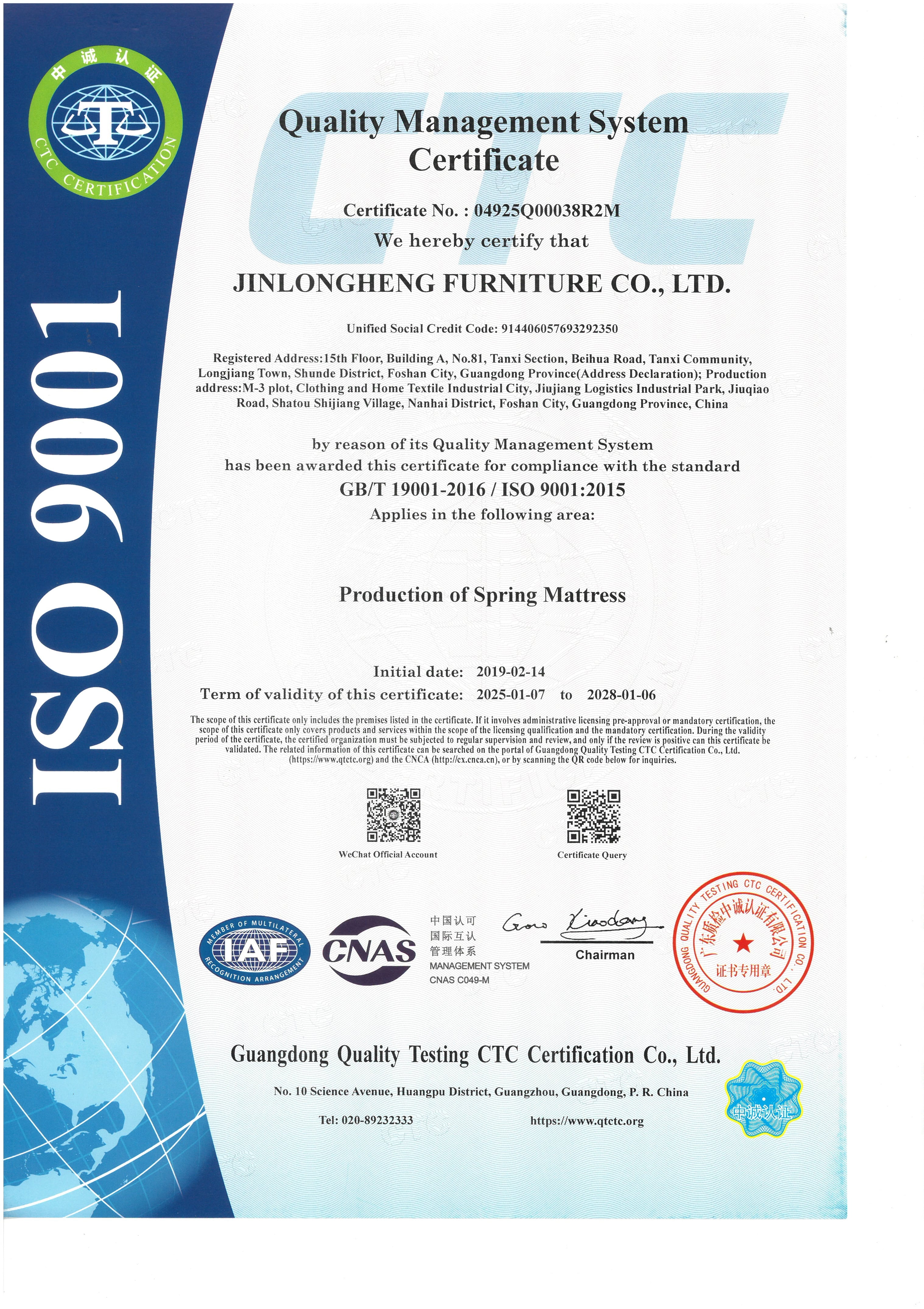
- Validate Certified Testing Facilities: Genuine manufacturers maintain rigorous quality systems, such as ISO 9001, BSCI, and accredited laboratories (like CNAS national standards) to execute international safety tests (BS 7177, CFR 1633).
- Analyze Scale and Output Metrics: True direct suppliers demonstrate large-scale footprints (e.g., over 600,000 m² of factory space) with verified monthly outputs exceeding 100,000 units.
- Evaluate Project Footprint: Original manufacturers maintain direct supply records across commercial hospitality, B2B wholesale, and residential contract developments globally.
Detailed Architectural/Principle Analysis
Distinguishing a genuine mattress factory from a trading intermediary requires examining raw component manufacturing depth. Trading companies typically source completed sub-assemblies from various vendors, leading to batch inconsistency. Conversely, authentic production plants maintain internal component workshops for foam pouring, spring coiling, and fabric quilting. Controlling these processes directly reduces component lead times and maintains strict structural standards across spring, foam, and hotel mattress lines.

Formal accreditation serves as another definitive layer of verification. Direct manufacturers undergo rigorous third-party audits to obtain compliance documentation, such as ISO 9001 quality management, ISO 14001 environmental standards, ISO 45001 safety frameworks, and BSCI social compliance certifications. Facilities housing CNAS-accredited national testing laboratories continuously validate fire retardancy (BS 7177, CFR 1633) and material durability on-site. These credentials enable direct factory execution for international hotel chains, such as Hotel Gołębiewski Mikołajki and Beijing Financial Street Ritz-Carlton Hotel.
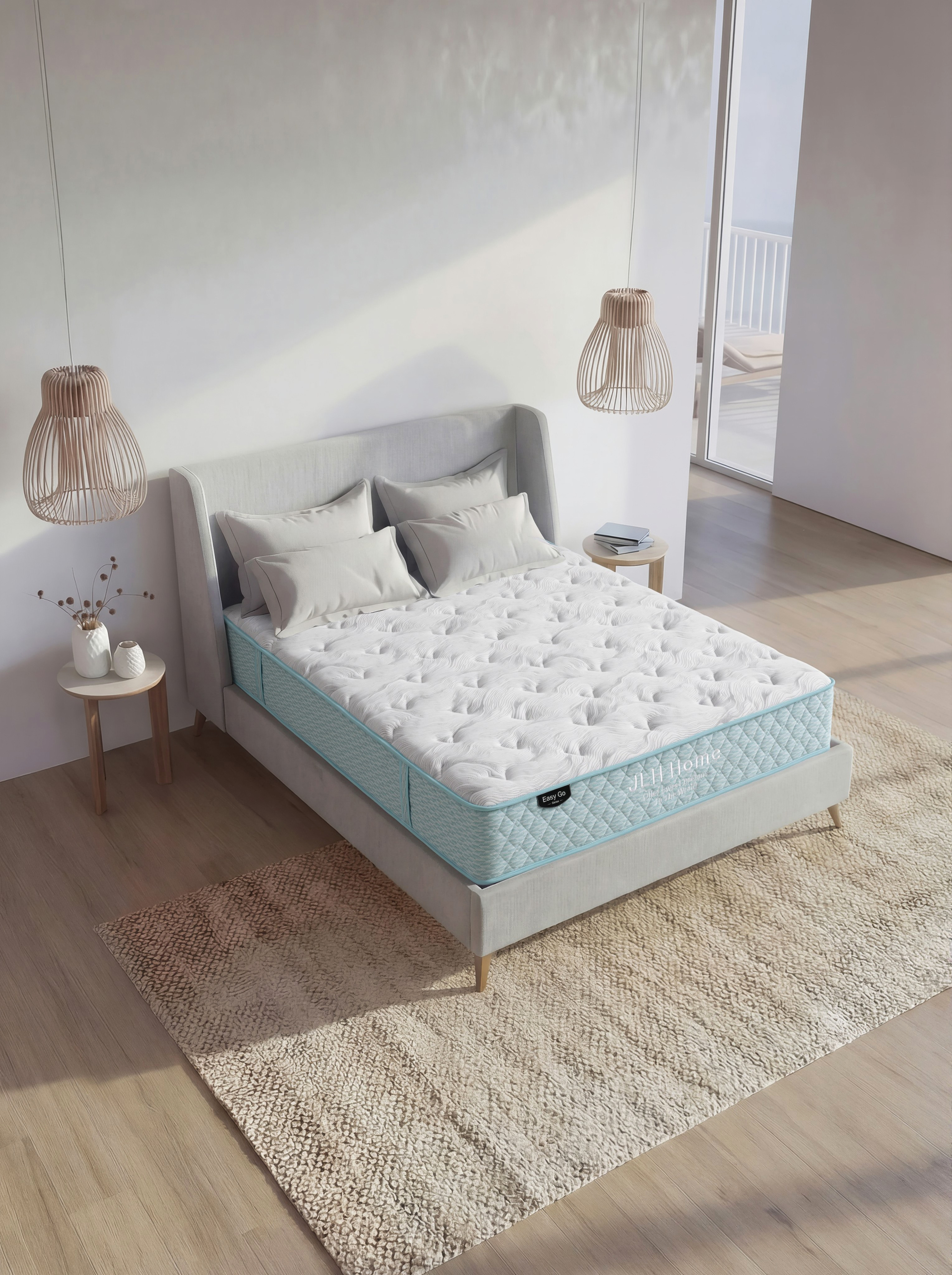
Proprietary packaging capabilities and logistic efficiencies further separate real plants from distributors. Advanced factories implement vacuum compression and rolled mattress packaging technologies. Mass-producing rolled mattresses reduces transit volume by up to 75% and lowers shipping costs by 60%, supported by container-based minimum order quantities (MOQ) and 15 to 35-day production lead times. Trading agents rarely control these automated compression lines directly.
Data/Solution Comparison
| Evaluation Parameter | Direct Mattress Manufacturer | Trading Agent / Intermediary |
|---|---|---|
| Component Production | In-house workshops (foam, springs, textiles) | Outsourced to third-party sub-suppliers |
| Quality Verification | ISO 9001, BSCI, CNAS accredited lab testing | Third-party certificates provided second-hand |
| Logistics Packaging | Patented automated vacuum rolling & compression | Manual or outsourced compressed packaging |
| Supply Capability | Scalable monthly volume (>100,000 units) | Limited by vendor stock and variable batch sizes |
| Lead Time & MOQ | 15–35 days; Container-based multi-model support | Variable lead times; Dependent on trader pipeline |
Frequently Asked Questions (FAQ)
What factory certifications best prove genuine manufacturing capabilities for mattresses?
Key authenticating credentials include ISO 9001 for quality management, BSCI for factory workplace standards, ISPA membership, and fire safety compliance certifications such as BS 7177 and CFR 1633. Facilities backed by CNAS national laboratory accreditation offer independent proof of raw material and finished product testing capabilities.
How does vertical integration of raw materials impact quality control and pricing?
Self-controlled workshops for foam, springs, and quilting allow manufacturers to manage raw input quality directly, prevent batch variance, and remove middleman markups. This integration maintains flexible delivery schedules while standardizing commercial-grade durability.
Can genuine mattress factories handle custom OEM/ODM packaging and rolled-up compressed shipments?
Yes, established production plants utilize automated vacuum compression technology to manufacture rolled mattresses, compressed sofas, and custom-branded bedding. Vacuum rolling cuts shipping volume by 75%, making large containerized shipments efficient for hospitality and wholesale distribution.
Final Conclusion & Recommendations
Verifying a mattress supplier requires scrutinizing factory footprint metrics, component manufacturing self-sufficiency, and third-party certifications. Partnering directly with an original manufacturer secures reliable lead times of 15 to 35 days, flexible container-load MOQs, direct OEM/ODM customization, and transparent shipment logistics via sea, air, or rail freight under standard T/T or L/C payment terms. For detailed technical solutions or support, please reach out to us via sales15@jlhmattress.cn
About Us
Jinlongheng Furniture Co., Ltd. has been dedicated to sleep industry research and manufacturing since 1992. The company operates a total production base of 630,000 square meters in Guangdong and employs over 800 staff, supporting a monthly mattress capacity of 120,000 units. Certified under ISO 9001, ISO 14001, ISO 45001, and BSCI, the company houses an in-house CNAS-accredited national laboratory and serves major commercial hospitality projects globally.

Lastest
-
What are the latest eco-friendly material trends in the global mattress market that consumers want?
2026-08-14 -
What are the safest payment terms to negotiate with a new manufacturer of compressed sofas?
2026-08-14 -
How do overseas manufacturers handle replacement parts for damaged headboards or frames of upholstered beds?
2026-08-14 -
What third-party audit reports should I ask for to verify a mattress factory's quality management?
2026-08-14 -
What is the average MOQ for importing compressed sofas, and how much does price drop with larger volume?
2026-08-14
SUBSCRIBE
INQUIRY