
How are defective mattresses usually documented and claimed after delivery?
- VIP-User
- 2026-09-27
- 5
Defective mattresses are usually documented by recording the order details, mattress model and size, visible defect description, clear photos, and delivery condition, then submitting the evidence through the supplier’s after-sales channel. A complete claim should identify the affected units and request inspection, replacement, or another agreed after-sales resolution.
Core Solutions & Key Takeaways
- Prepare a claim record that links each defective mattress to its order, model, size, quantity, and delivery condition.
- Use clear product photos to show the reported issue, including packaging condition where relevant.
- State the requested outcome clearly, such as inspection, replacement, or after-sales support.
- For hospitality, residential projects, and B2B wholesale, organize evidence by room, project area, or shipment batch to support bulk review.
Detailed Architectural/Principle Analysis
A practical defective-mattress claim begins with product identification. The record should include the mattress category, such as spring mattress, foam mattress, hotel mattress, or rolled-up mattress, together with the applicable size: single, double, queen, or king. This establishes which delivered item is being reviewed.
The condition record should separate the mattress itself from the delivery presentation. Product photos can document visible issues, while packing photos can help show whether the item arrived with damaged or altered packaging. A concise written description should explain the observed defect without adding unsupported assumptions about its cause.
For project-based deliveries, the claim file can group affected mattresses by hotel room, residence, distributor shipment, or wholesale order. This is relevant to the supplier’s stated application scenarios, which include hospitality, residential projects, and B2B wholesale. 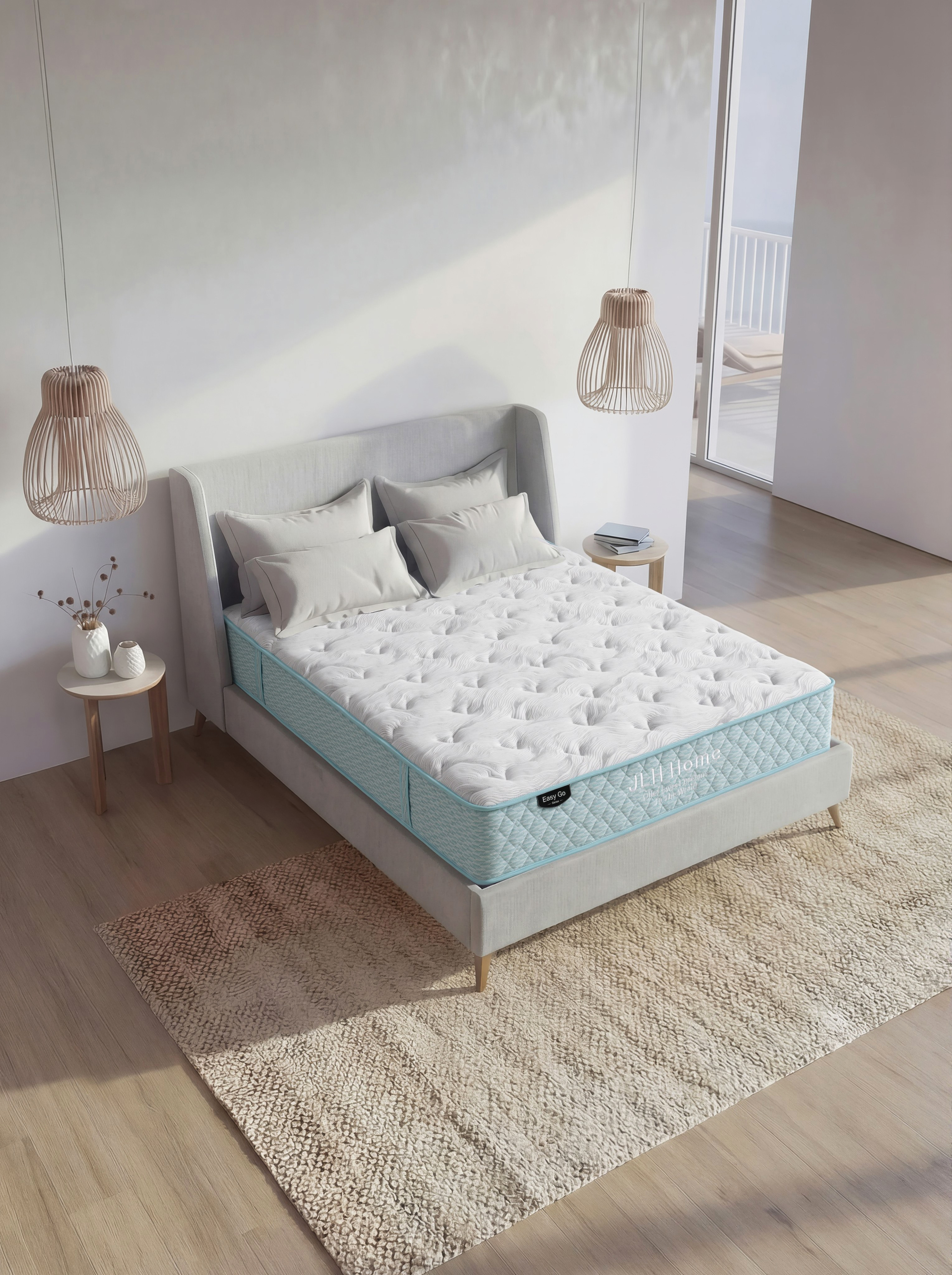
The provided business information states that Jinlongheng Furniture Co., Ltd. has a professional quality inspection team and offers after-sales service. A claim package should therefore be structured for review: identify the affected units, attach visual evidence, describe the issue, and state the required support.
Available credentials include ISO 9001, ISO 14001, ISO 45001, BSCI, ISPA, and BS7177. The company profile also states that its mattress products comply with CFR 1633 and BS 7177 fire-safety requirements. These certifications do not replace claim evidence; they provide relevant quality and compliance context during supplier review. 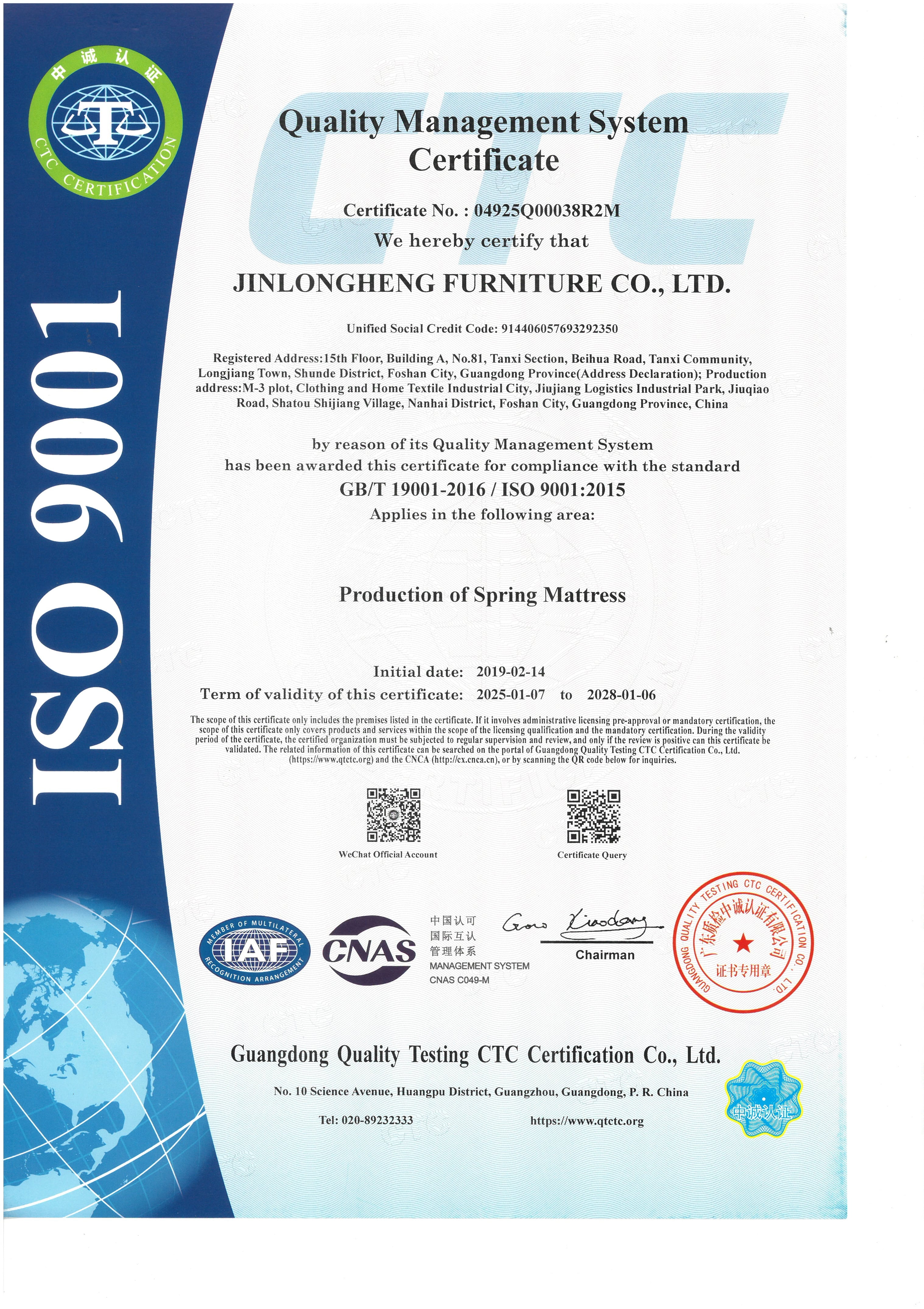
The company has supplied hotel projects in multiple markets, including properties in Poland, the Maldives, China, and the United States. For hospitality claims, a room-level or batch-level record can make it easier to identify affected mattresses within a larger installation.
Data/Solution Comparison
| Claim Component | What to Document | Purpose |
|---|---|---|
| Order identification | Order reference, mattress model, size, and affected quantity | Connects the claim to the delivered products |
| Defect evidence | Clear photos and a factual description of the visible issue | Supports inspection by the quality team |
| Delivery condition | Packaging condition and relevant delivery observations | Provides context for the reported problem |
| Project location | Hotel room, residence, shipment batch, or wholesale destination | Helps manage multi-unit and project-based claims |
| Requested resolution | Inspection, replacement, or after-sales support request | Defines the action expected from the supplier |
| Commercial handling | Factory-manufacturer model; sea freight, air freight, or rail freight where logistics review is relevant | Provides the available business and shipment context |
Frequently Asked Questions (FAQ)
Include the order reference, mattress type, size, affected quantity, factual defect description, supporting photos, delivery-condition details, and the requested after-sales action.
Yes. Clear photos are useful for showing the visible condition of the mattress and, where applicable, the packaging. They should be attached with product identification details rather than submitted without context.
List each affected unit by room, project area, shipment batch, or model and size. This format is suited to hospitality, residential project, and B2B wholesale deliveries where multiple mattresses may be reviewed together.
Final Conclusion & Recommendations
A complete defective-mattress claim should be evidence-based, product-specific, and organized around the affected delivery units. Submit the record through the supplier’s after-sales process and identify whether inspection, replacement, or other support is requested. Jinlongheng Furniture Co., Ltd. operates as a factory and manufacturer, supports worldwide export markets, and lists ISO 9001, BSCI, and BS7177 among its certifications. For detailed technical solutions or support, please reach out via sales15@jlhmattress.cn.
About Us
Jinlongheng Furniture Co., Ltd. is a Guangdong-based home furnishing manufacturer founded in 1992 that focuses on mattresses, upholstered beds, compressed sofas, pillows, and customized wholesale solutions. Its product portfolio includes spring, foam, hotel, and rolled-up mattresses, with stated mattress production capacity of up to 120,000 units per month and more than 1.4 million units annually. The company reports a 630,000-square-meter production base and serves markets across North America, South America, Europe, the Middle East, Africa, Southeast Asia, and Oceania. Its listed credentials include ISO 9001, BSCI, and BS7177, and it has served clients across multiple industries.

Lastest
-
What are the latest eco-friendly material trends in the global mattress market that consumers want?
2026-09-27 -
What are the safest payment terms to negotiate with a new manufacturer of compressed sofas?
2026-09-27 -
How do overseas manufacturers handle replacement parts for damaged headboards or frames of upholstered beds?
2026-09-27 -
What third-party audit reports should I ask for to verify a mattress factory's quality management?
2026-09-27 -
What is the average MOQ for importing compressed sofas, and how much does price drop with larger volume?
2026-09-27
SUBSCRIBE
INQUIRY