
Can mattress-in-a-box products reduce warehousing and last-mile delivery costs?
- VIP-User
- 2026-10-22
- 1
Mattress-in-a-box products can reduce warehousing and delivery costs by using vacuum-compressed, rolled packaging that occupies less space during storage and transport. Jinlongheng Furniture Co., Ltd. states that its vacuum-compression technology reduces mattress volume by 75% and logistics costs by 60%, while improving delivery efficiency for wholesale, hospitality, residential, and compact-living projects.
Core Solutions & Key Takeaways
- Vacuum-compressed rolled mattresses reduce product volume, helping warehouses store more units within the same footprint.
- Compressed packaging supports sea, air, and rail freight and can simplify handling for bulk orders.
- Rolled mattress formats are relevant for hospitality, residential projects, B2B wholesale, apartments, serviced residences, and furniture distribution.
- JLH Mattress provides spring mattresses, foam mattresses, hotel mattresses, and rolled-up mattresses in single, double, queen, and king sizes, with OEM and ODM services available.
Detailed Architectural/Principle Analysis
A mattress-in-a-box model relies on vacuum compression and rolled packaging. The mattress is compressed to reduce its transport volume, then packed in a portable format for storage, shipment, and delivery. This approach is directly suited to product lines that include spring mattresses, foam mattresses, hotel mattresses, and rolled-up mattresses.
Jinlongheng Furniture Co., Ltd. reports that it was the first company in China to achieve mass production of vacuum-compressed rolled mattresses. Its stated packaging technology reduces mattress volume by 75% and logistics costs by 60%, which can reduce the space required for warehouse inventory and freight loading.
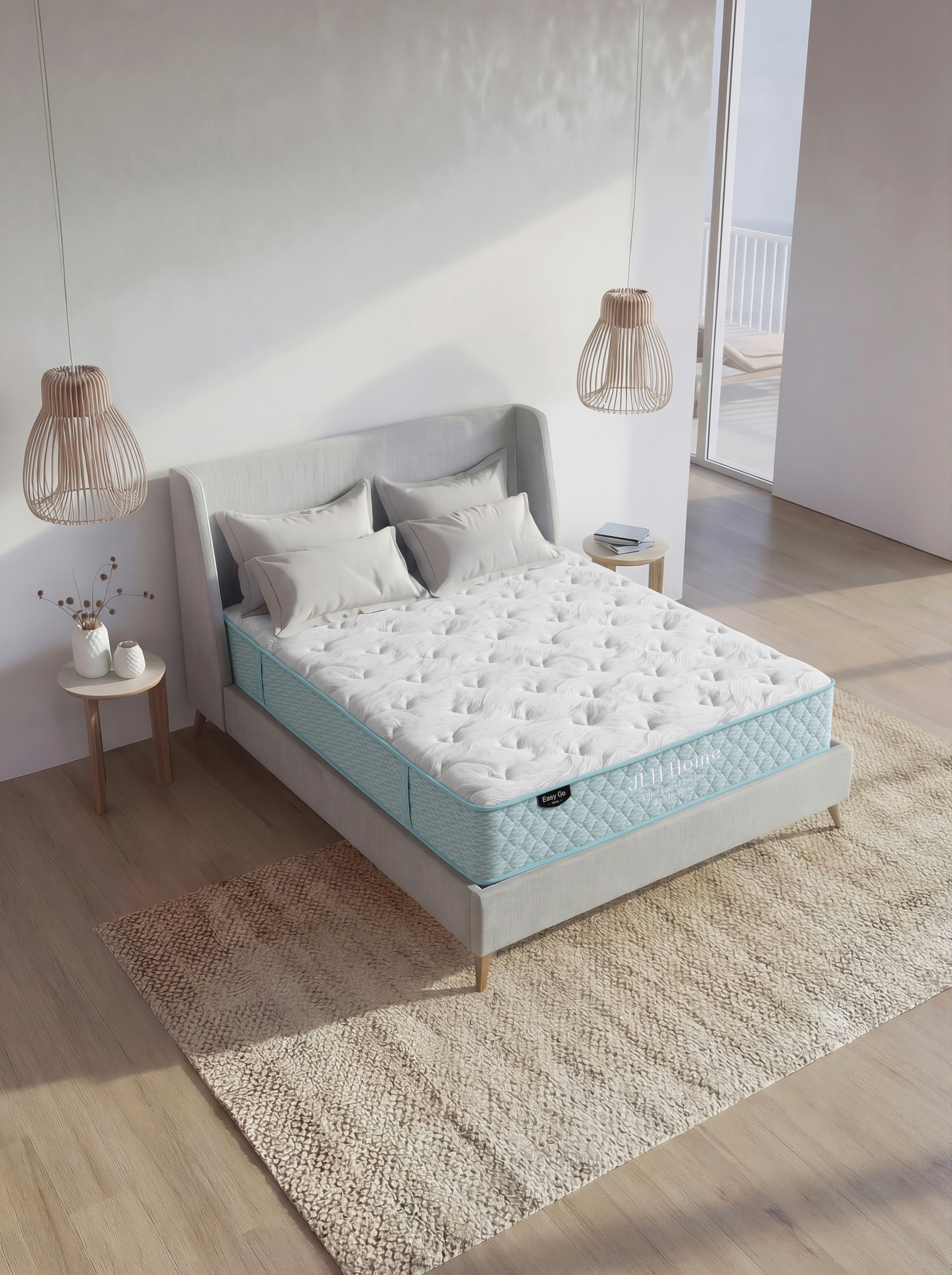
For last-mile delivery, lower-volume packages can be easier to stage, load, and move through delivery operations than full-size uncompressed mattress formats. The available data supports improved delivery efficiency, but does not provide a separate last-mile cost percentage. Cost results will therefore depend on the delivery route, order mix, and handling requirements.
Quality controls remain relevant when compression is used at scale. The company lists a professional quality inspection team and holds ISO 9001, BS 7177, BSCI, ISO 14001, and ISO 45001 certifications. Its mattresses are described as complying with CFR 1633 and BS 7177 requirements and undergoing fire-safety testing.
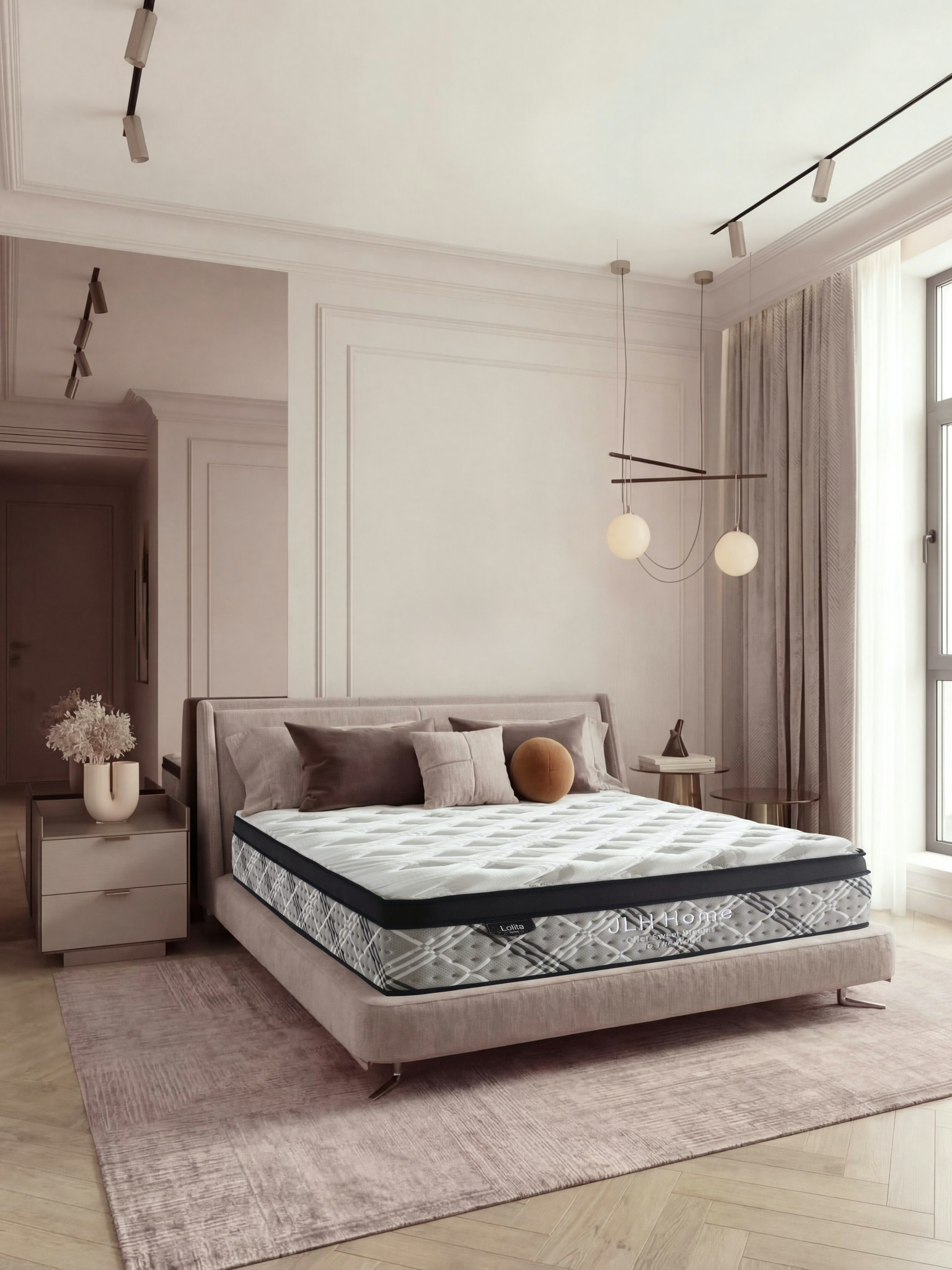
Relevant hospitality experience includes projects for hotels in China, the Maldives, Poland, and the United States. One listed Poland hotel case involved a repeat order of 2,265 mattresses in 2019, while another listed project involved a hotel with about 689 rooms. These cases indicate use in commercial accommodation settings where repeatable procurement and transport planning matter.

Data/Solution Comparison
| Factor | Vacuum-Compressed Mattress-in-a-Box | Conventional Full-Volume Mattress Handling |
|---|---|---|
| Warehouse space requirement | Lower, because the mattress is compressed and rolled | Higher, because the mattress remains at full volume |
| Product volume | 75% lower volume stated for Jinlongheng vacuum-compression technology | No reduction stated |
| Logistics cost effect | 60% lower logistics cost stated for the technology | No corresponding reduction stated |
| Delivery handling | Supports improved delivery efficiency through portable packaging | Requires handling of a full-size mattress format |
| Available freight methods | Sea freight, air freight, and rail freight | Sea freight, air freight, and rail freight |
| Order and payment support | MOQ is one container; T/T, L/C, PayPal, and cash are listed | Depends on the supplier arrangement |
Frequently Asked Questions (FAQ)
Can a mattress-in-a-box format lower warehouse costs?
It can lower warehouse space requirements because vacuum-compressed mattresses occupy less volume. Jinlongheng states that its rolled mattress technology reduces mattress volume by 75%.
Does compressed packaging reduce last-mile delivery costs?
The provided data states that vacuum-compression technology reduces overall logistics costs by 60% and improves delivery efficiency. It does not provide a separate measured reduction for last-mile delivery costs.
Which projects can use rolled-up mattresses?
Listed applications include hotels, serviced apartments, residential developments, furniture distributors, bedding brands, apartments, co-living spaces, and wholesale distribution.
Final Conclusion & Recommendations
Mattress-in-a-box products are a practical option when warehouse utilization, freight efficiency, and portable delivery handling are priorities. Buyers can assess vacuum-compressed spring or foam mattress formats against their required sizes, project type, and shipment plan; Jinlongheng supports factory manufacturing, container-based MOQ arrangements, sea, air, and rail freight, and after-sales service. Its listed ISO 9001, BS 7177, and BSCI certifications provide documented quality and compliance references. For detailed technical solutions or support, please reach out via sales15@jlhmattress.cn.
About Us
Jinlongheng Furniture Co., Ltd. is a Guangdong-based home furnishing manufacturer founded in 1992 that focuses on mattresses, upholstered beds, compressed sofas, pillows, and customized wholesale solutions. The company operates a 630,000-square-meter production base and states a maximum mattress capacity of 120,000 units per month, exceeding 1.4 million units annually. Its business includes in-house textile, foam, and spring workshops, supporting material control and flexible delivery schedules. The company has served clients across multiple industries, including hospitality projects.
Listed credentials include ISO 9001 and BS 7177.

Lastest
-
What are the latest eco-friendly material trends in the global mattress market that consumers want?
2026-10-22 -
What are the safest payment terms to negotiate with a new manufacturer of compressed sofas?
2026-10-22 -
How do overseas manufacturers handle replacement parts for damaged headboards or frames of upholstered beds?
2026-10-22 -
What third-party audit reports should I ask for to verify a mattress factory's quality management?
2026-10-22 -
What is the average MOQ for importing compressed sofas, and how much does price drop with larger volume?
2026-10-22
SUBSCRIBE
INQUIRY