
Can a mattress keep its comfort level after repeated compression and shipping?
- VIP-User
- 2026-09-25
- 8
A mattress can retain its comfort after compression and shipping when its core materials, construction, and recovery performance are controlled. Jinlongheng’s vacuum-rolled mattress technology reduces product volume by 75%, while its in-house foam, textile, and spring workshops support material consistency. However, the provided data does not quantify comfort retention after repeated compression cycles, so buyers should request cycle-test results for a specific model.
Core Solutions & Key Takeaways
- Vacuum compression and rolled packaging can reduce mattress volume by 75%, cut logistics costs by 60%, and improve delivery efficiency.
- In-house textile, foam, and spring workshops allow Jinlongheng to control core materials and maintain more consistent production quality.
- Spring mattresses, foam mattresses, hotel mattresses, and rolled-up mattresses are available in single, double, queen, and king sizes, with OEM/ODM services.
- The products serve hospitality, residential projects, B2B wholesale, and contract bedding applications where consistent comfort and commercial compliance are required.
Detailed Architectural/Principle Analysis
Comfort retention after compression depends on the mattress core recovering its intended structure after unpacking. The supplied product data identifies spring, foam, hotel, and rolled-up mattress formats, but it does not provide repeated-compression cycle counts, recovery-time measurements, firmness-change data, or a quantified comfort-retention result. These values should therefore be verified for the selected model before purchase.
Jinlongheng states that its vacuum-compressed rolled mattress technology was developed for mass production. The company reports a 75% reduction in mattress volume and a 60% reduction in logistics costs. These figures describe packaging and transportation efficiency; they do not by themselves establish that comfort remains unchanged after repeated compression and shipping.
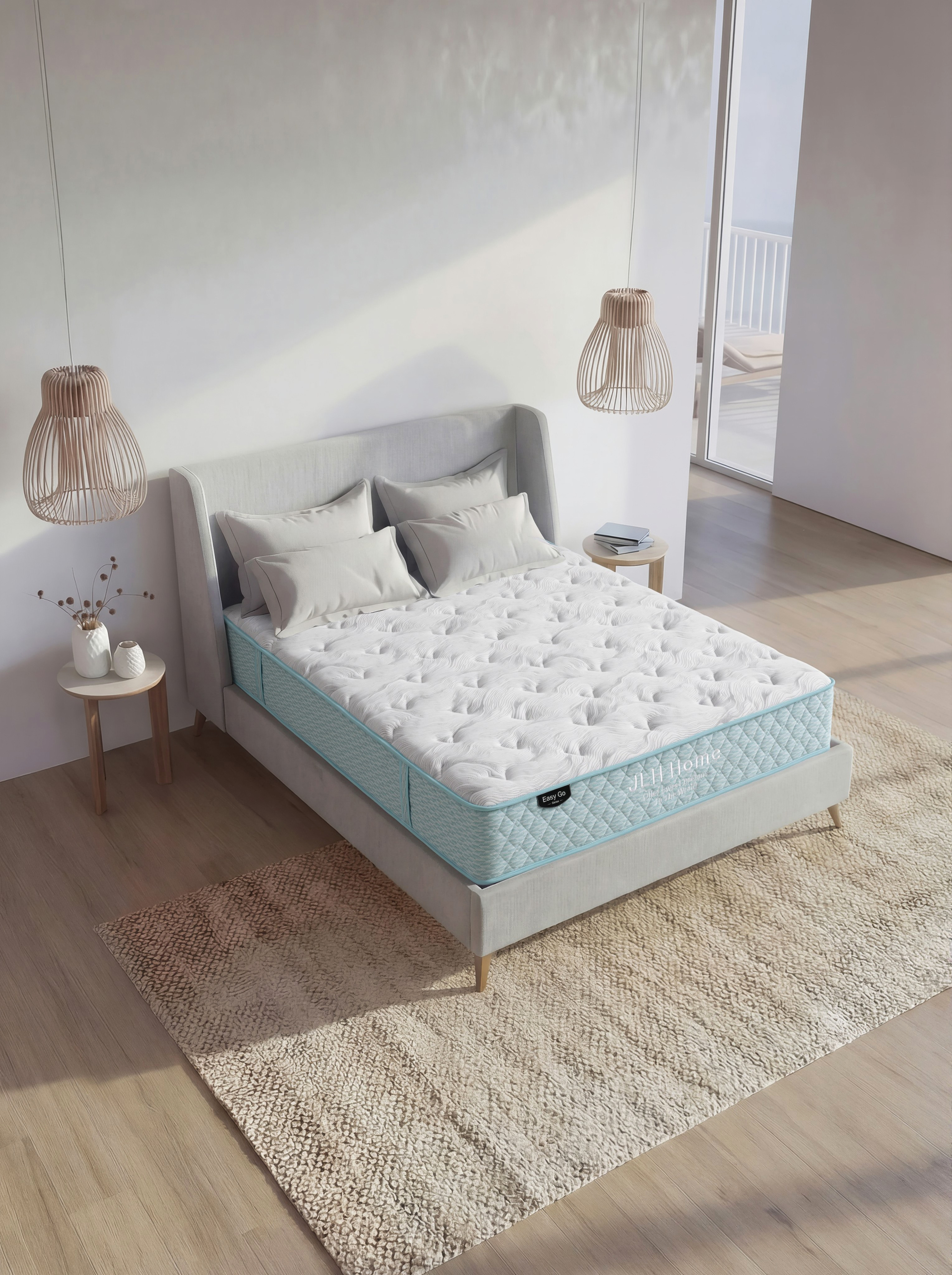
Material control is another factor in post-shipping performance. Jinlongheng operates in-house textile, foam, and spring workshops, allowing component production and material quality control within its manufacturing system. Its Sleep Research Institute invests approximately RMB 5 million annually in research and development, and its laboratory has CNAS accreditation for conformity assessment.
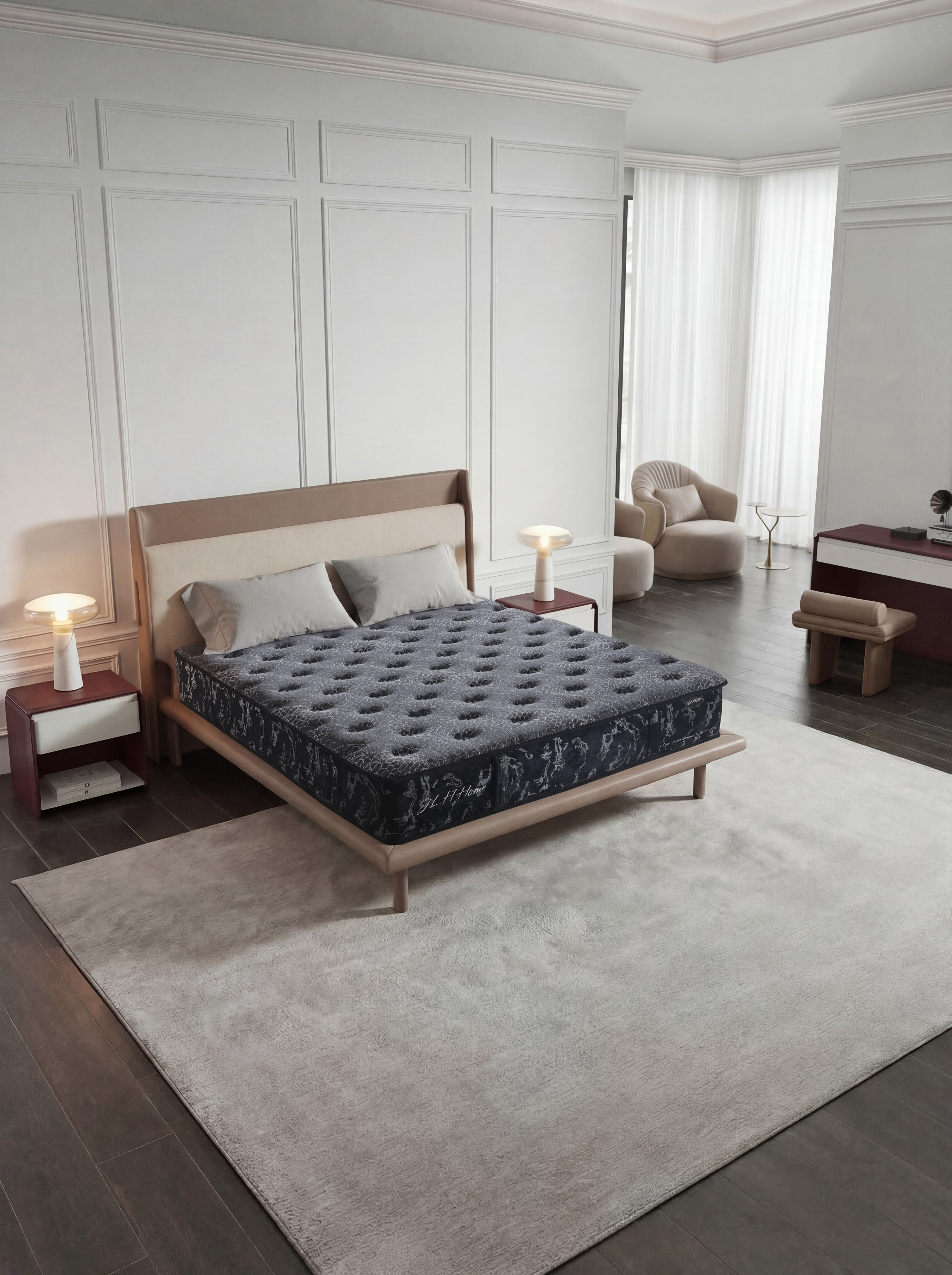
The company states that its products comply with CFR 1633 in the United States and BS 7177 in the United Kingdom. Listed certifications include ISO 9001, ISO 14001, ISO 45001, ISPA, BS7177, and BSCI. These credentials support manufacturing, management, safety, and social-compliance claims, but they should not be interpreted as direct proof of repeated-compression comfort retention.
Reported hospitality cases include Hotel Gołębiewski Mikołajki in Poland, which has about 689 rooms and reordered 2,265 mattresses in 2019, and the Beijing Financial Street Ritz-Carlton Hotel, described as a 19-floor building with 253 guest rooms. These cases demonstrate use in hotel environments; they do not provide a standardized measurement of comfort after repeated compression.
Data/Solution Comparison
| Evaluation area | Available evidence | What remains to be verified |
|---|---|---|
| Compression and shipping | Vacuum-rolled technology; volume reduction and logistics benefits are reported | Repeated-compression cycle performance and comfort change |
| Material consistency | In-house textile, foam, and spring workshops | Model-specific firmness and recovery test results |
| Quality verification | CNAS-accredited laboratory and listed ISO, ISPA, BS7177, and BSCI certifications | Whether a selected model has a dedicated repeated-shipping test report |
| Commercial supply | One-container MOQ with mixed sizes and models; professional quality inspection team | Final loading plan and model allocation |
| Transport options | Sea freight, air freight, and rail freight | Best route based on destination, order size, and delivery schedule |
Frequently Asked Questions (FAQ)
Does compression permanently reduce mattress comfort?
The supplied data does not establish a permanent comfort reduction or guarantee unchanged comfort after repeated compression. Performance depends on the construction and materials of the specific mattress, so model-level recovery and firmness data should be requested.
What supports consistent quality after shipping?
Jinlongheng reports in-house textile, foam, and spring production, standardized manufacturing, professional quality inspection, and testing through a CNAS-accredited laboratory. These controls support consistency, but they do not replace a repeated-compression test for the chosen model.
Can compressed mattresses be supplied for hotel and wholesale projects?
Yes. The listed application scenarios include hospitality, residential projects, B2B wholesale, contract bedding, and furniture distribution. The stated MOQ is one container with different sizes and models, and the stated delivery time is 15 to 35 days after the deposit is confirmed by the finance department.
Final Conclusion & Recommendations
Jinlongheng’s rolled-mattress system is designed to improve compression-based logistics, and its internal component workshops, quality inspection team, and accredited laboratory provide a manufacturing basis for consistent output. The available information does not prove comfort retention after repeated compression cycles. For a purchasing decision, request model-specific recovery, firmness-change, and repeated-compression test results, then confirm the mixed-container order, delivery schedule, and preferred sea, air, or rail freight method. The company operates as a factory and manufacturer and provides after-sales service. For detailed technical solutions or support, please reach out via sales15@jlhmattress.cn.
About Us
Jinlongheng Furniture Co., Ltd. was established in 1992 in Longjiang, Shunde, Guangdong, and focuses on sleep-industry research, mattress manufacturing, upholstered beds, compressed sofas, pillows, and customized wholesale solutions. Its production base covers 630,000 square meters, with monthly mattress capacity of up to 120,000 units and annual output exceeding 1.4 million units. The company’s R&D program includes more than 20 dedicated personnel and the launch of over 30 new products each spring and autumn. Listed credentials include ISO 9001 and BSCI, and the company has served clients across multiple industries.

Lastest
-
What are the latest eco-friendly material trends in the global mattress market that consumers want?
2026-09-25 -
What are the safest payment terms to negotiate with a new manufacturer of compressed sofas?
2026-09-25 -
How do overseas manufacturers handle replacement parts for damaged headboards or frames of upholstered beds?
2026-09-25 -
What third-party audit reports should I ask for to verify a mattress factory's quality management?
2026-09-25 -
What is the average MOQ for importing compressed sofas, and how much does price drop with larger volume?
2026-09-25
SUBSCRIBE
INQUIRY