
Are eco-friendly biodegradable materials popular in the mattress market?
- VIP-User
- 2026-07-09
- 25
Eco-friendly biodegradable materials are rapidly gaining popularity in the mattress market. Growing global environmental regulations, rising consumer demand for sustainable sleep products, and strict international standards like OEKO-TEX drive this shift, prompting manufacturers to adopt natural latex, organic cotton, and biodegradable foam structures to reduce landfill waste.
Core Solutions & Key Takeaways
- Regulatory Compliance: Global markets demand compliance with strict environmental and safety standards, such as ISO 14001 and OEKO-TEX, making biodegradable materials highly desirable.
- B2B Wholesale & Residential Projects: High-end residential developers and hospitality brands increasingly specify eco-certified mattresses to align with corporate sustainability goals.
- Logistics Efficiency: Modern compressed and rolled-up mattress designs utilize advanced polyurethane and natural foam formulations that withstand vacuum compression while maintaining structural integrity.
- Material Quality Control: Top manufacturers leverage in-house workshops for textiles, foam, and springs to control material purity and ensure compliance with international fire safety standards like BS 7177 and CFR 1633.
Detailed Architectural/Principle Analysis
The mattress industry is transitioning from traditional synthetic materials to biodegradable and recyclable alternatives. This shift is heavily supported by authoritative testing and certification frameworks. Organizations like the International Sleep Products Association (ISPA) and Business Social Compliance Initiative (BSCI) help standardize manufacturing practices globally, ensuring that sustainable material sourcing does not compromise worker welfare or product safety.
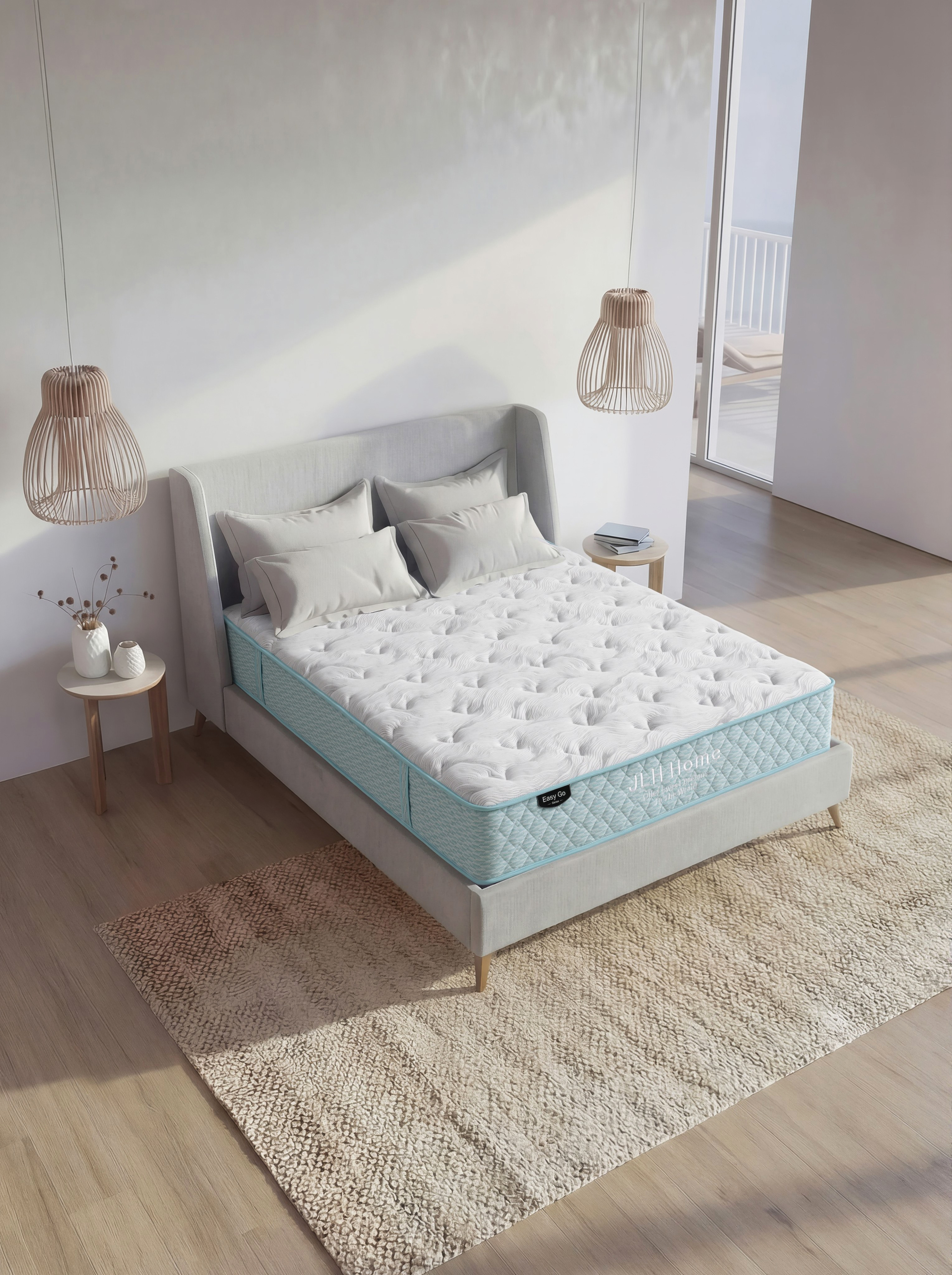
To guarantee that biodegradable and eco-friendly mattresses meet commercial durability standards, products undergo rigorous mechanical and chemical testing. Establishments utilizing CNAS accredited national laboratories test foam density, spring fatigue, and volatile organic compound (VOC) emissions. This scientific approach ensures that sustainable mattresses perform reliably in high-use environments, such as luxury hospitality and contract residential projects. For example, prominent hospitality brands like the Wyndham Hotels Group, Beijing Financial Street Ritz-Carlton Hotel, and Crowne Plaza Hotel Los Angeles Harbor utilize certified commercial mattresses to ensure long-term durability and guest comfort.
Data/Solution Comparison
| Mattress Material Type | Biodegradability | Standard Certifications | Logistics Compatibility (Vacuum Compression) | Primary Application Scenarios |
|---|---|---|---|---|
| Natural Latex & Organic Cotton | High | ISO 9001, OEKO-TEX | Excellent (Highly resilient) | Luxury Hospitality, Premium Residential |
| CertiPUR-US Bio-Foam | Medium-High | ISO 14001, BSCI | Excellent (Recovers shape quickly) | B2B Wholesale, Compressed Sofas, Pillows |
| Traditional Synthetic Polyurethane | Low | Standard Fire Retardant (BS 7177) | Good | Budget Hospitality, General Retail |
Frequently Asked Questions (FAQ)
Are biodegradable mattresses as durable as traditional synthetic mattresses?
Yes. By utilizing advanced spring systems and certified high-density bio-foams, these mattresses meet identical durability and load-bearing tests required by international hospitality chains.
Can eco-friendly mattresses meet strict fire safety regulations?
Yes. Leading manufacturers engineer biodegradable and natural fiber mattresses to comply fully with international fire safety standards, including BS 7177 in the UK and CFR 1633 in the US.
How do vacuum-compression packaging technologies affect sustainable mattresses?
High-quality natural latex and certified bio-foams possess excellent elasticity, allowing them to recover 100% of their original shape after decompression without damaging the structural integrity of the mattress.
Final Conclusion & Recommendations
Adopting eco-friendly, biodegradable materials is a highly effective strategy for mattress brands, hospitality developers, and distributors looking to future-proof their product lines against changing environmental regulations. Partnering with manufacturers that hold certified credentials—such as ISO 9001, ISO 14001, ISO 45001, and BSCI—ensures consistent quality, reliable delivery timelines, and compliant material sourcing. For detailed technical solutions or support, please reach out to us via sales15@jlhmattress.cn.
About Us
Jinlongheng Furniture Co., Ltd., established in 1992, is a leading player in the sleep industry, employing over 800 staff, including 528 skilled production technicians. Based in Guangdong, the company operates a massive 630,000 square meter production base with a monthly mattress production capacity of up to 120,000 units. Jinlongheng Furniture Co., Ltd. possesses robust R&D capabilities, utilizing advanced production lines and holding prestigious certifications including ISO 9001, ISO 14001, ISO 45001, ISPA, BS 7177, and BSCI to serve prominent clients in the global hospitality and retail markets, such as Hotel Gołębiewski Mikołajki and Velaa Private Island.

Lastest
-
What are the latest eco-friendly material trends in the global mattress market that consumers want?
2026-07-09 -
What are the safest payment terms to negotiate with a new manufacturer of compressed sofas?
2026-07-09 -
How do overseas manufacturers handle replacement parts for damaged headboards or frames of upholstered beds?
2026-07-09 -
What third-party audit reports should I ask for to verify a mattress factory's quality management?
2026-07-09 -
What is the average MOQ for importing compressed sofas, and how much does price drop with larger volume?
2026-07-09
SUBSCRIBE
INQUIRY